
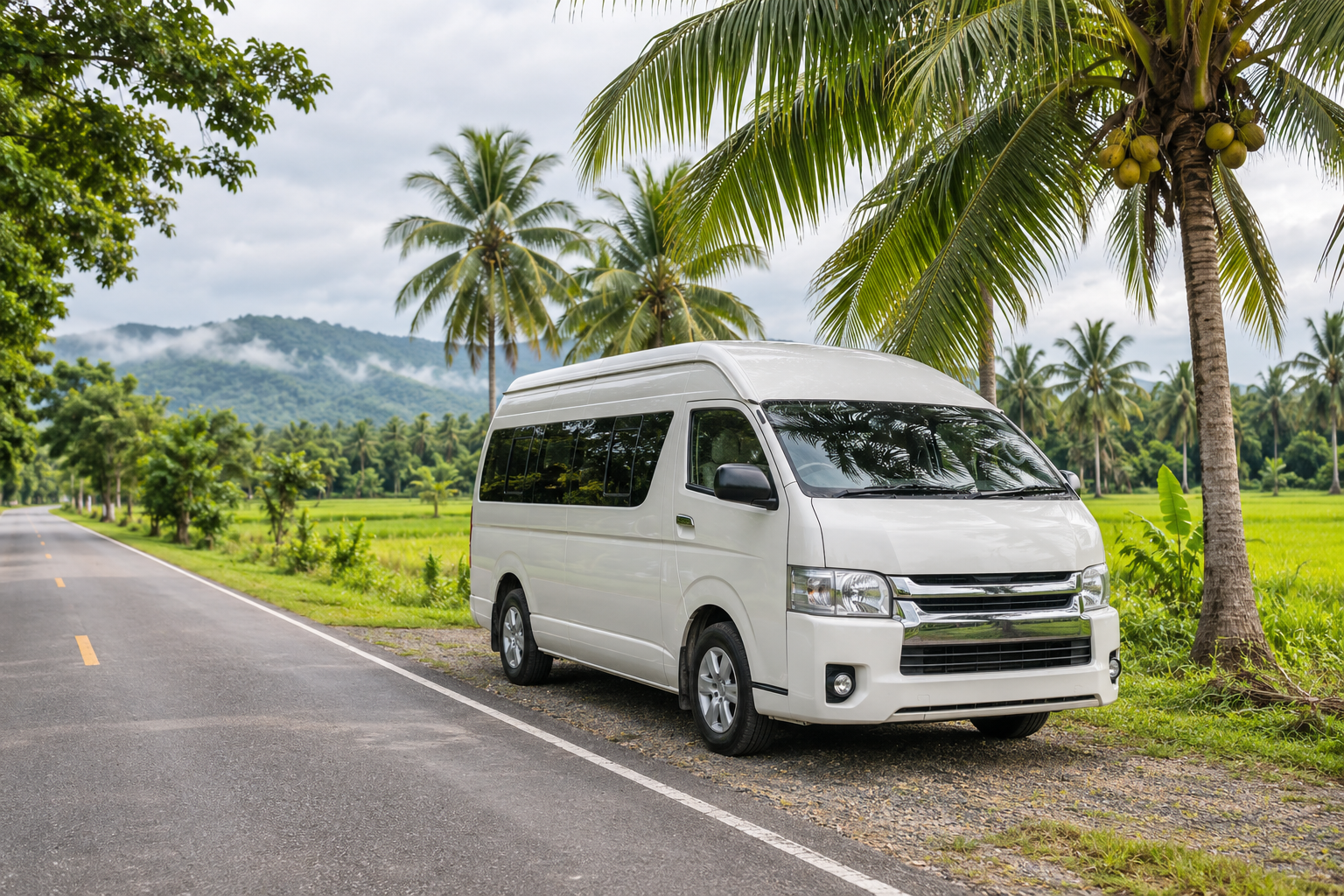
Is Chaiya worth a private-van day from Surat Thani?
Choose Chaiya when you want a mainland day built around southern Thai heritage rather than another beach transfer. From a Surat Thani hotel, a sensible plan pairs Wat Phra Borommathat Chaiya with the nearby Chaiya National Museum, then adds Phum Riang only if a textile visit has been confirmed. Keep a fixed ferry departure or flight separate from this unhurried version. A cultural excursion works best when the group can stay with an interesting place instead of watching a connection clock.
This is particularly suitable for travelers interested in religious architecture, regional history or traditional textiles. Families can enjoy it too, provided the day contains breaks and a manageable amount of interpretation. If your priority is swimming, an island arrival or a tightly scheduled airport transfer, tell the booking team that first. Chaiya should earn its place in the itinerary through your interests, not simply because it appears near another destination on a provincial map.
What connects the temple, museum and weaving community?
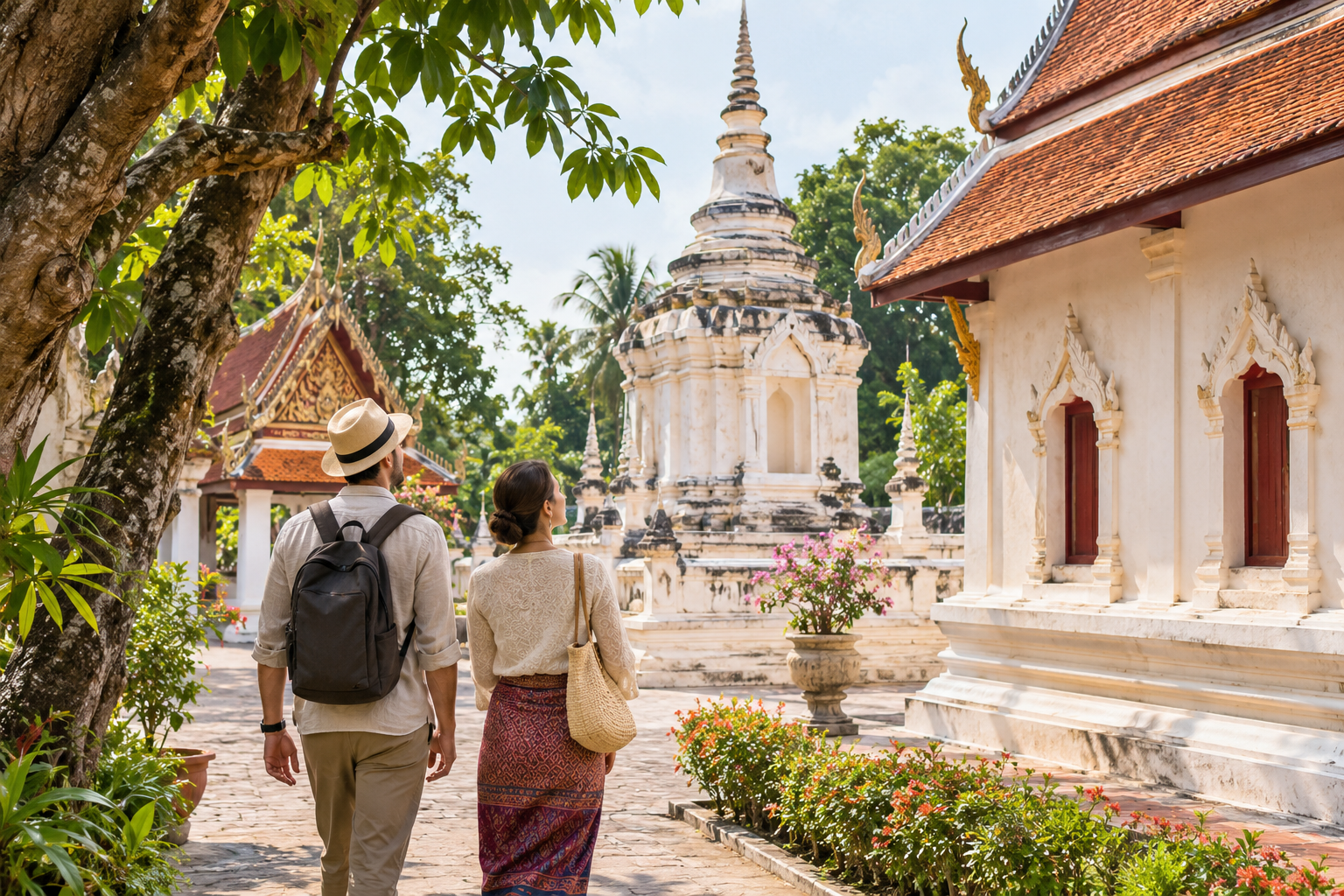
The Tourism Authority of Thailand identifies Wat Phra Borommathat Chaiya as a major religious landmark in Chaiya district and connects its architecture with the Srivijaya tradition. The independent Travelfish account, last edited in November 2020, also describes this influence. Their agreement supports a heritage-focused visit; it does not establish that every part of the building is original or justify repeating sweeping claims that it is the only surviving example.
Chaiya National Museum adds archaeological and art-historical context. Lovethailand's museum guide describes collections connected with ancient Chaiya and the wider history of the region. Think of the two visits as complementary: a living place of worship and a place for interpreting material evidence. Exact exhibits, room access and interpretation services should be checked for your date rather than assumed from a guide's inventory.
TAT also documents Phum Riang's silk-weaving tradition, including decorative work with gold and silver threads. That offers a different perspective on local culture, but a shop visit, a weaving demonstration and a hands-on workshop are three different requests. The existence of a craft tradition does not mean that an artisan is available to receive visitors whenever a van arrives. Ask which experience can actually be arranged before making it the centerpiece of the afternoon.
A focused hotel-to-hotel heritage day
Start with a pickup at your actual Surat Thani accommodation and travel to Chaiya with the temple and museum as the essential visits. Let confirmed access determine their order. If the museum has a restricted visiting window, arrange the rest of the day around it; if worship or an event changes access at the temple, allow the sequence to adapt respectfully. The chauffeur should know the intended entrances and reunion points before the group leaves the vehicle.
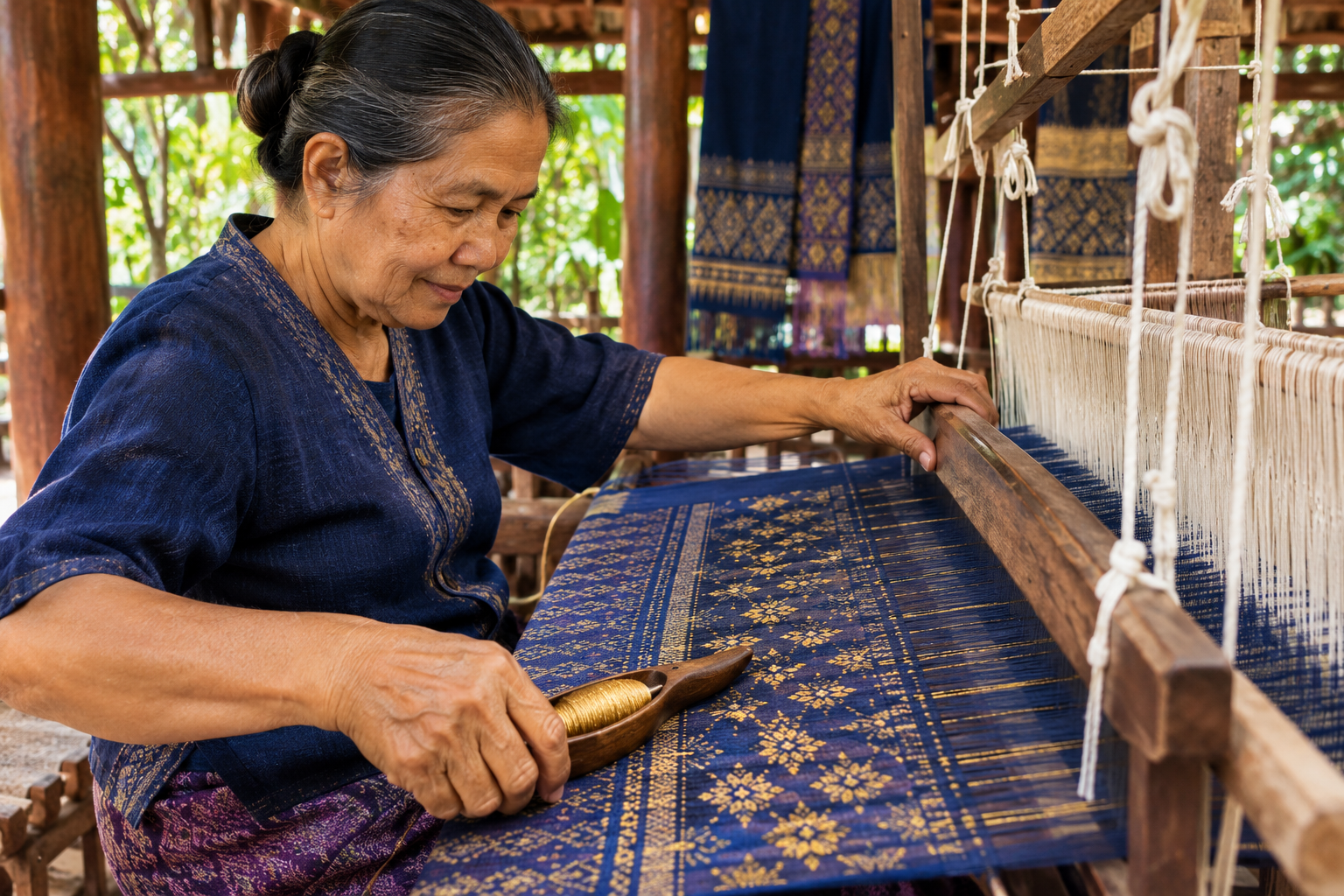
At the temple, leave room for quiet observation rather than treating the stop as a quick photograph. Dress respectfully, follow local instructions about shoes and photography, and give worshippers space. At the museum, choose a few objects or themes to investigate carefully. A useful family exercise is to compare the forms seen at the temple with what the displays explain, without expecting children to absorb every historical period in one visit.
Plan lunch as a real break. Then decide between a confirmed Phum Riang visit and a comfortable return to Surat Thani. For a mixed-interest party, completing two meaningful stops can be more satisfying than adding three places simply to fill the vehicle's working day. Identify the optional stop in the booking request so that shortening the afternoon is an agreed possibility rather than a last-minute dispute.
When Phum Riang deserves extra time
Travelers with a serious interest in textiles should request a named host or shop, the intended activity and its expected duration. Explain whether you want to observe a loom, learn about patterns, buy fabric or discuss an order. Those requests may require different arrangements and language support. A general driver booking should not be interpreted as a guaranteed appointment with a craftsperson.
For example, two friends interested in weaving could prioritize a confirmed afternoon appointment and keep the museum visit shorter. A family with little interest in shopping could retain only the temple and museum. Neither version is inherently better; the difference is the experience the passengers value. If no weaving visit can be confirmed, describe Phum Riang as an optional community or shopping stop, not as a workshop that will somehow become available on arrival.
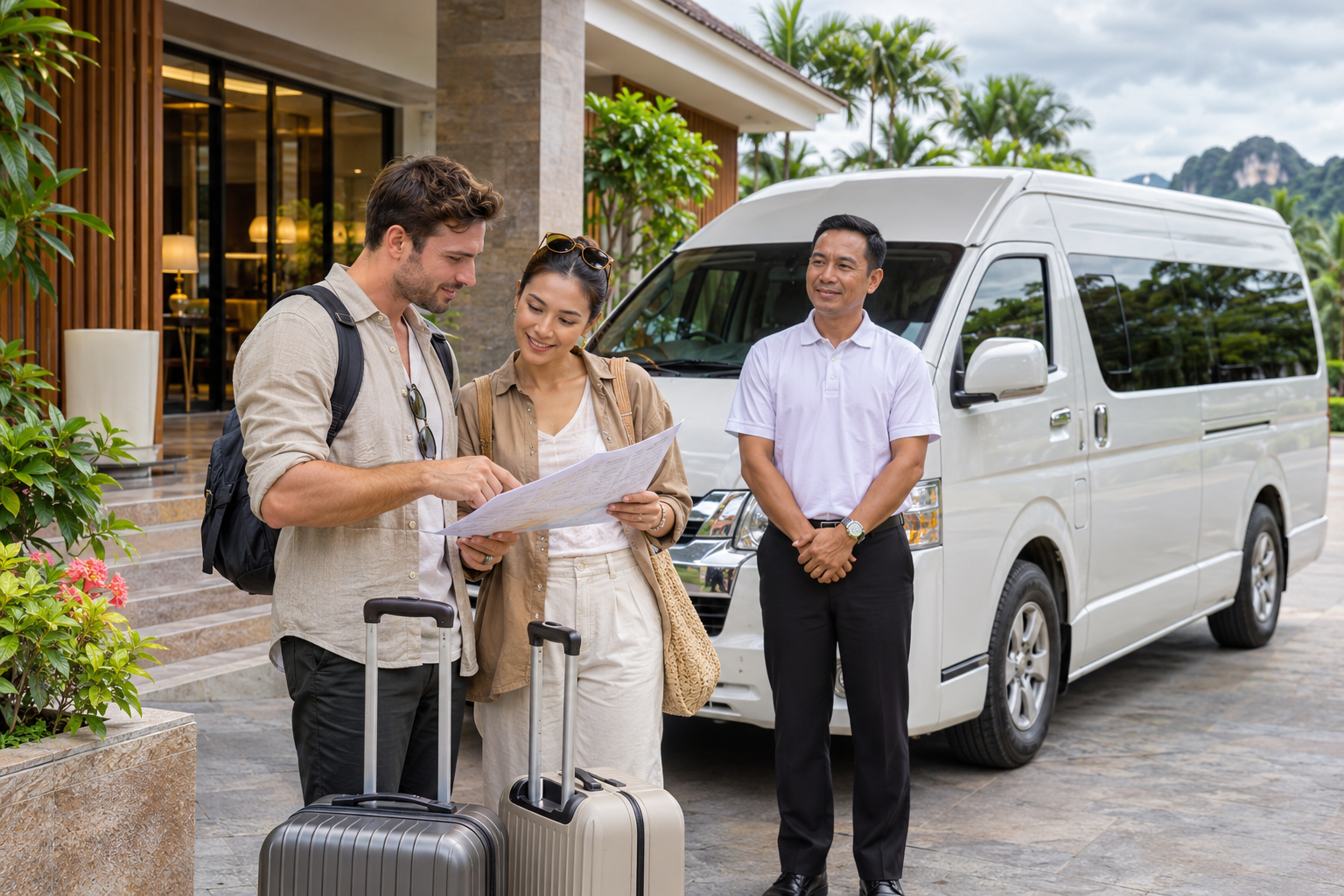
Ask permission before photographing people at work or handling materials. If you intend to purchase textiles, discuss dimensions, intended use and any care questions directly with the seller. The transport team can help coordinate arrival and departure, but product provenance and ordering terms should come from the person selling the item. Allow enough time for that conversation if shopping is a genuine purpose of the journey.
Can you combine Chaiya with an airport or ferry transfer?
Possibly, but it becomes a different transport plan. Send the exact arrival or departure details, the actual pier or terminal and the required check-in time. “Surat Thani transfer” is too imprecise to assess a detour. The booking team needs to work backward from the non-negotiable connection and decide whether any useful visiting time remains after driving, luggage handling, meals and a reasonable contingency allowance.
After an arriving flight, delays and baggage collection can consume time reserved for sightseeing. Before a departing ferry, the consequence of running late may be losing the island connection. In either situation, request a clearly conditional stop with an agreed point at which it is dropped. Do not ask the chauffeur to recover lost time by hurrying. If Chaiya is the main reason for the journey, give it its own day instead.
An overnight in Surat Thani can separate the cultural day from the onward connection. Compare that with staying closer to Chaiya only if a confirmed next-day activity makes the change worthwhile. Include the effort of packing, checking in and moving luggage when assessing the benefit. Adding a hotel change for one short stop often creates more coordination than it removes.
Why choose a chauffeur-driven van?
A private van is most useful when several travelers want the same itinerary, need coordinated breaks or carry luggage between accommodation and onward transport. Keeping one vehicle across the temple, museum and optional textile visit avoids arranging each leg separately. It also allows the group to agree a practical return window and meeting point at every stop.
A rental car may suit travelers happy to navigate, park and make their own local arrangements. A chauffeur becomes more valuable when nobody wants to drive after a full day, when passengers have different comfort needs, or when the final destination differs from the starting hotel. Neither choice guarantees attraction access. Specialist historical interpretation, language support and craft appointments should be requested separately where needed.
Comfort and weather decisions before booking
Describe walking needs precisely: whether steps are difficult, how long someone can stand, and whether a wheelchair or stroller must fit in the van. Ask about the actual entrances and routes proposed. Do not infer that proximity between temple and museum means the whole visit is step-free. A shorter visit with a suitable drop-off point may be more useful than a nominally comprehensive itinerary.
For children, provide ages and request appropriate seating arrangements in advance. Count suitcases as well as passengers. Ask where lunch and rest breaks can fit, and mention dietary requirements before the route is finalized. Check the forecast and local conditions close to departure; a museum can offer an indoor component, but it is not a universal substitute if it is closed or if travel conditions disrupt the route.
Send these details for a comparable quote
- Travel date, exact pickup address and final destination.
- Adults, children's ages, luggage count and mobility equipment.
- Your priority: temple, museum, textile visit or onward connection.
- Whether Phum Riang means shopping, observing weaving or an arranged workshop.
- Language or specialist guiding needs, meal preferences and desired pace.
- Flight or ferry details, check-in requirements and any fixed appointment.
Ask the response to separate vehicle service from admissions, local guides, craft activities, parking and additional waiting. For a route with an overnight, clarify the driver's accommodation and the following day's service. Compare totals only once the stops, working period and inclusions match. The traveler should identify the essential experience; the booking team should confirm access and explain what remains provisional.
Final checks for a rewarding Chaiya visit
Before departure, reconfirm the museum's operating day, the temple arrangements and any textile appointment. Published visitor information is useful context, but it is not a booking confirmation. This guide deliberately avoids fixed prices, opening hours and driving-time promises. Its generated images are illustrative travel scenes, not documentary proof of current exhibits, workshops or vehicle availability.
For a broader southern journey, compare this cultural day with our Khanom and Sichon coast guide, then use the multi-stop private-van planning guide to structure the transport request. Preserve the distinction between a relaxed heritage day and a connection-driven transfer. Chaiya is most rewarding when the schedule gives its history and living traditions room to be understood.