

Start with the coast, then decide whether to add a boat
A private van is a useful way to explore Khanom and Sichon if your group wants beach stops, coastal viewpoints and a dependable pickup without organising each journey separately. Choose a road-only day when scenery and flexible breaks are the priority. Add a dolphin-watching boat only when everyone wants the water-based experience and you can leave room for changing conditions. If the boat is the main reason for travelling, consider sleeping in Khanom rather than attaching it to a tightly timed arrival or ferry connection.
These are three different bookings: a coastal excursion with a driver, a local boat trip, and any onward transfer. They can be coordinated, but one does not automatically include the others. The best enquiry tells Mister Tour Thai which experience matters most, where the day must finish and what you would prefer if the boat cannot depart.

Understand the geography before choosing your hotel
Khanom and Sichon sit on the mainland Gulf coast of Nakhon Si Thammarat province. Khanom is a district as well as a town name, so a booking described simply as pickup in Khanom leaves considerable room for misunderstanding. Na Dan and Nai Phlao are different beach areas, with accommodation spread along the coast rather than gathered around one walkable centre. Send the exact property location, including the entrance used by vehicles.
The scenic road links the Sichon side of the coast with the Khao Phlai Dam hills and the Nai Phlao area. This is the landscape for a road excursion: wooded slopes, bays and changing sea views. Dolphin outings use separate departure areas, including Ao Talet and Laem Prathap farther north. A hotel beside a southern beach does not put you beside the boat departure point. Have the driver and boat operator agree the same map pin before setting pickup time.
Option one: a coastal day without a boat
For a party staying in Nakhon Si Thammarat, a focused coast day can combine the Sichon area, a meal and selected stops along the road towards Khanom before returning. For guests already staying in Khanom, the sequence can be reversed. These are suggested route shapes, not fixed timetables: the actual hotel, conditions and desired time outside the vehicle determine how much to include.
A first-person coastal account updated in April 2026 describes the road around Khao Phlai Dam, a stop at Ao Thong Yang and onward viewpoints towards Nai Phlao. Its useful lesson is the variation between stops. Some have recognisable parking areas; others are little more than a roadside view. Ask your chauffeur to select places with suitable parking and a practical walk to the view. A photograph taken from the carriageway is not a reason to reproduce that stop.
For example, a couple travelling with an older parent might choose one accessible meal venue and one viewpoint with a short approach, leaving the rest as scenery from the van. Ask about steps, surfaces and the distance from parking before describing any stop as accessible. Another party may prefer a longer beach walk and fewer viewpoints. The benefit of a private vehicle is control over that balance, not the number of map pins visited.
Option two: make the boat the main event
Khanom's dolphins are wild animals. Thailand's Department of Marine and Coastal Resources documented humpback and Irrawaddy dolphins during a December 2024 survey across the Khanom–Don Sak area. That supports the region's wildlife interest; it does not establish today's population, a tourist sighting rate or where an animal will appear on your date. Book an observation outing because you value the coastal experience even if no dolphins are seen.
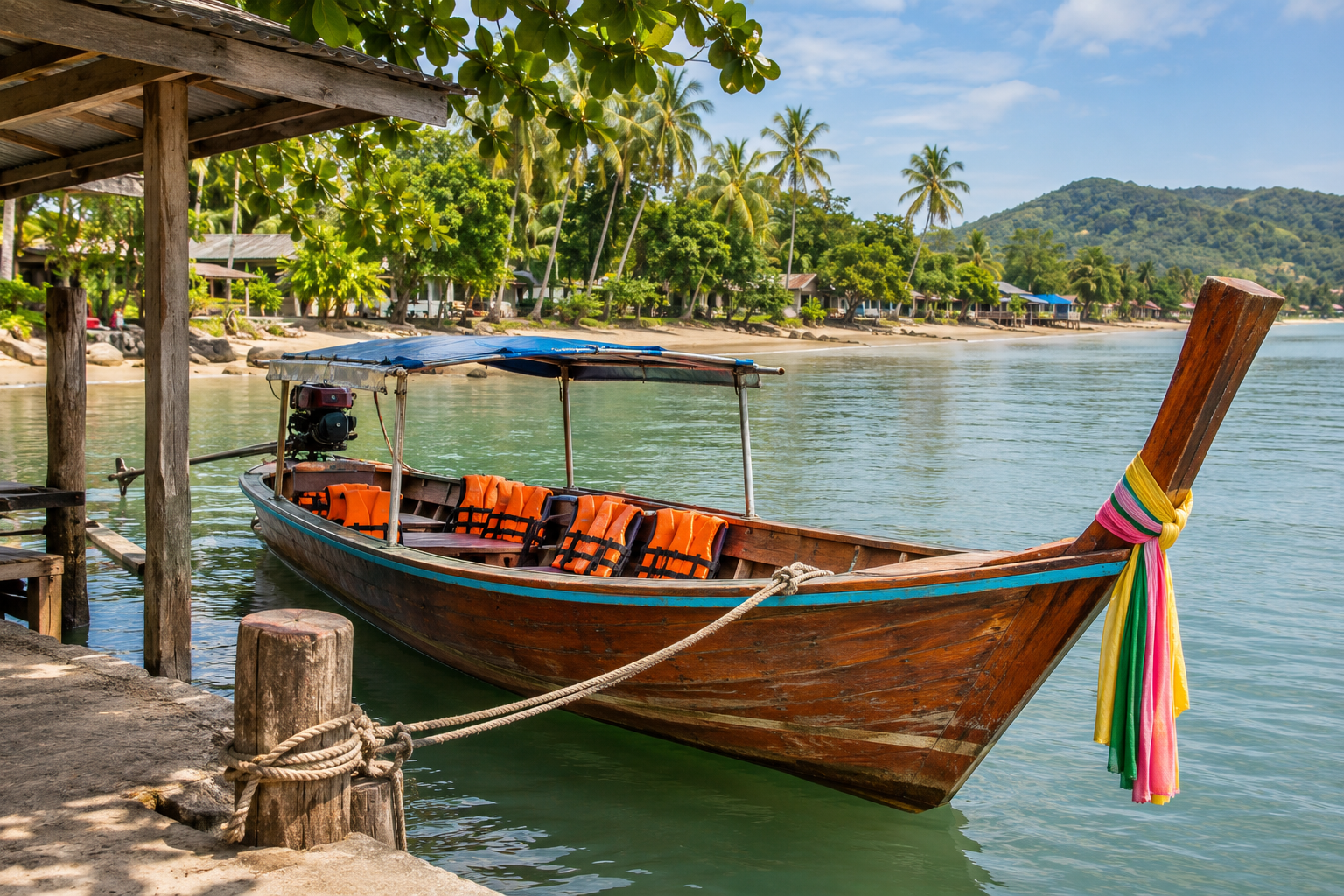
Independent local travel coverage identifies boat departures around Ao Talet and Laem Prathap. Confirm the precise pier, operator, meeting arrangement and route for your booking. Online descriptions differ on boat capacity and duration, so do not translate the number of seats in your van into an assumed number of seats aboard. Ask how your whole party will travel and whether separate boats would finish together.
Build the road schedule around the confirmed boat appointment. Keep the meal and optional coast stop afterwards flexible, and agree when the driver should expect you back. A chauffeur can handle the land transfer and waiting arrangement; the skipper determines whether the water-based outing can proceed. A van reservation alone is not evidence that a boat has been reserved or that someone will meet you at the pier.

Before paying, ask about boarding steps, shade, seating, lifejackets suitable for each passenger and what facilities are available before departure. Describe children's ages and any difficulty stepping between pier and boat. For wildlife observation, request an approach that avoids feeding, chasing or surrounding dolphins. If those arrangements cannot be explained clearly, reconsider the outing rather than assuming a premium road vehicle establishes the standard on the water.
When an overnight is worth the extra arrangement
A nearby overnight separates the arrival journey from the boat appointment. It is particularly useful when your inbound flight arrives later in the day or when the group would rather settle into a hotel before an excursion. You can plan a coastal meal on arrival, discuss the next day's conditions locally and keep luggage out of the activity itself.
An overnight also creates extra choices that need pricing. Will the same chauffeur stay available, or will you book a transfer in and another service the next day? Does your hotel have dining within comfortable walking distance, or will you want evening transport? A lower room rate at a remote address can be offset by additional journeys. Compare the complete stay and transport arrangement before selecting a property solely from a beach photograph.
For a hypothetical family with suitcases and a stroller, a sensible enquiry could request an airport-to-hotel transfer, a separate boat-and-coast day and a later Don Sak drop. That gives each leg a clear purpose. It does not require keeping a van on duty throughout every free afternoon, unless that availability is something the family specifically wants and the operator confirms.
Leave room for weather without losing the purpose of the day
Regional guides describe a wetter, potentially rougher period late in the year on this Gulf coast. That seasonal context is especially relevant to a November enquiry, but it is not a forecast for your departure. Reconfirm the boat decision close to travel and use the operator's assessment of the actual conditions. Sunshine at your hotel is not enough information to decide what the water is like along the proposed route.
Choose the fallback before the day starts. If the boat is cancelled, would you prefer a shorter coastal outing, a hotel day with a rescheduled transfer, or a different date? Establish how each choice affects driver waiting, mileage and cancellation charges. A road-only itinerary still needs its own conditions check; do not assume every viewpoint or beach remains appropriate simply because the water activity has been removed.
Keep swimming separate from a scenic beach stop. A pleasant shore photograph does not establish suitable water conditions, and a chauffeur service is not a supervised swimming excursion. If time on the beach is central to your plan, explain whether you mean a walk, lunch with a sea view or entering the water. Those choices require different facilities, clothing and time allowances.
Don Sak, flights and the final drop-off
Don Sak is a mainland connection point for Gulf island ferries, but a general request for the ferry pier is not precise enough. Send the ferry operator, exact terminal, booked departure and required check-in information. Ask the transport provider to assess the road leg against that deadline, including any coast stops. The van quote should say whether it ends at the mainland terminal or includes any further arrangements.
If a ferry or flight is fixed, make it the controlling commitment. Do not add a wildlife search with an uncertain finish merely because the locations look close on a map. Consider placing the boat outing on the previous day. Likewise, compare airport pickups using actual flight details and hotel addresses, not a generic driving time quoted for the district. Tell the driver which luggage must remain available during stops and where the remaining bags will be kept.
Send a brief that can become a clear quotation
- Addresses and dates: exact pickup and final destination, hotel map pins, travel date, flight or ferry details where relevant.
- Party and luggage: adults, children's ages, suitcase sizes, stroller or other bulky items, and requested child seating to confirm.
- Main priority: coast-only exploration, dolphin observation, a hotel transfer with selected stops, or an overnight arrangement.
- Activity handoff: named boat supplier and pier if booked, or a request to clarify who will arrange them.
- Pace: walking preferences, meal breaks, desired return window and the first optional stop to remove if time becomes short.
- Commercial terms: vehicle and driver, fuel and parking, waiting allowance, additional hours, boat services, admission if applicable, overnight arrangements and cancellation terms.
Request a written breakdown that makes the transport and activity commitments clear. If coastal scenery is enough, a focused road day is the simplest starting point. If dolphins are the main interest, give the boat outing its own time and a genuine fallback. Mister Tour Thai can assess the route from that brief, with the final programme and availability confirmed for your dates.
Research checked on 20 November 2026. Images are AI-generated travel illustrations, not documentary photographs of current facilities, wildlife sightings, vehicles or tour operations.