
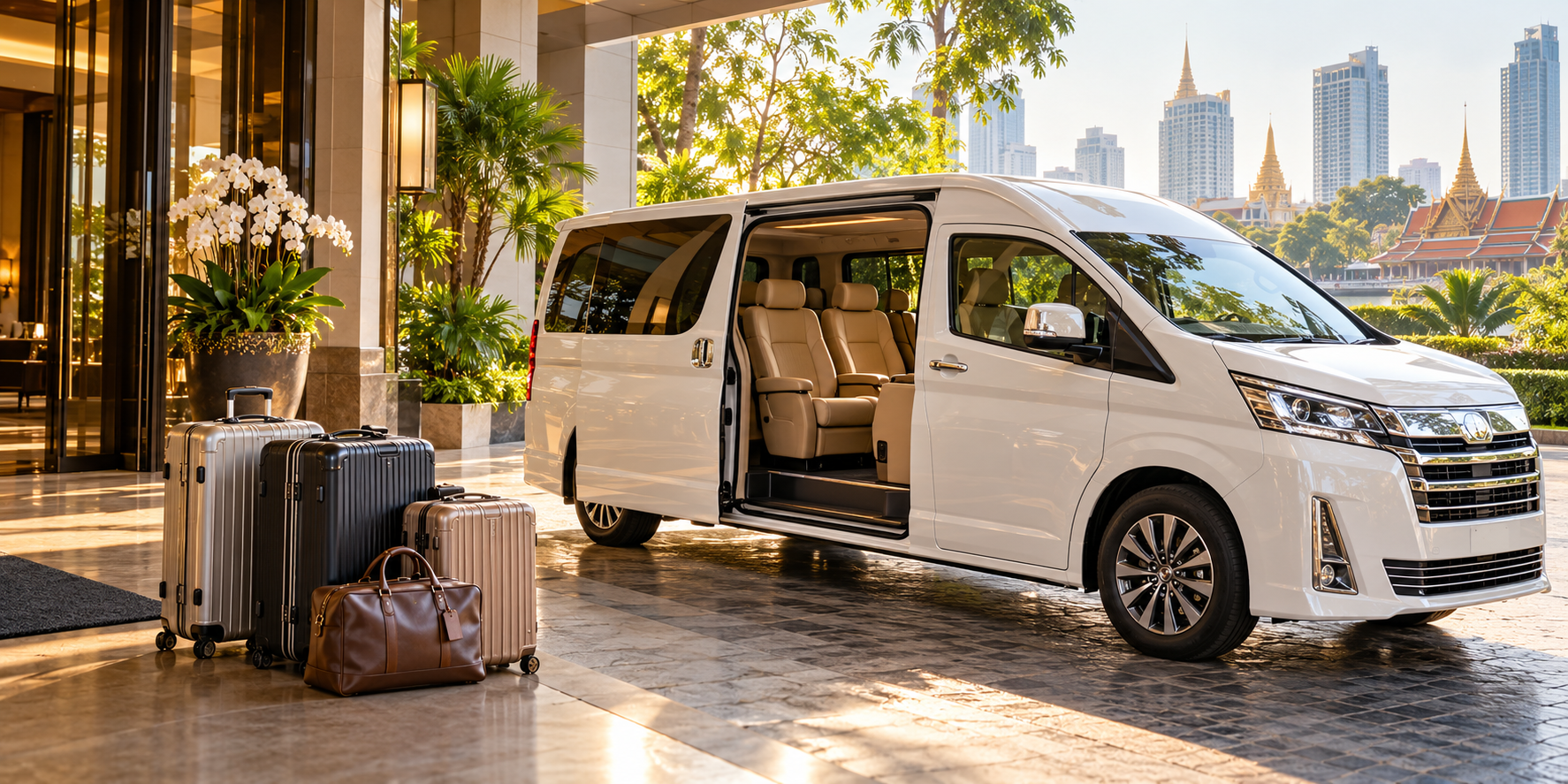
Quick answer: when a private van makes sense
A chauffeur-driven private van is most useful when your Thailand itinerary has more than one moving part: airport or hotel pickup, luggage, a destination outside the city, mixed walking comfort, or a hotel change at the end of the day. It is not simply a faster taxi. It is a way to keep the route, bags, meeting points, and rest breaks in one plan while the group focuses on the trip itself.
The strongest private-van day is usually built around one main purpose, one optional second chapter, and a clear final drop-off. That may be Bangkok to Ayutthaya with a hotel return, Bangkok to a coast hotel with one cultural pause, or a city pickup followed by a countryside overnight. Trying to add every famous stop can make a private route feel just as rushed as public transport. The advantage is thoughtful pacing, not a longer checklist.
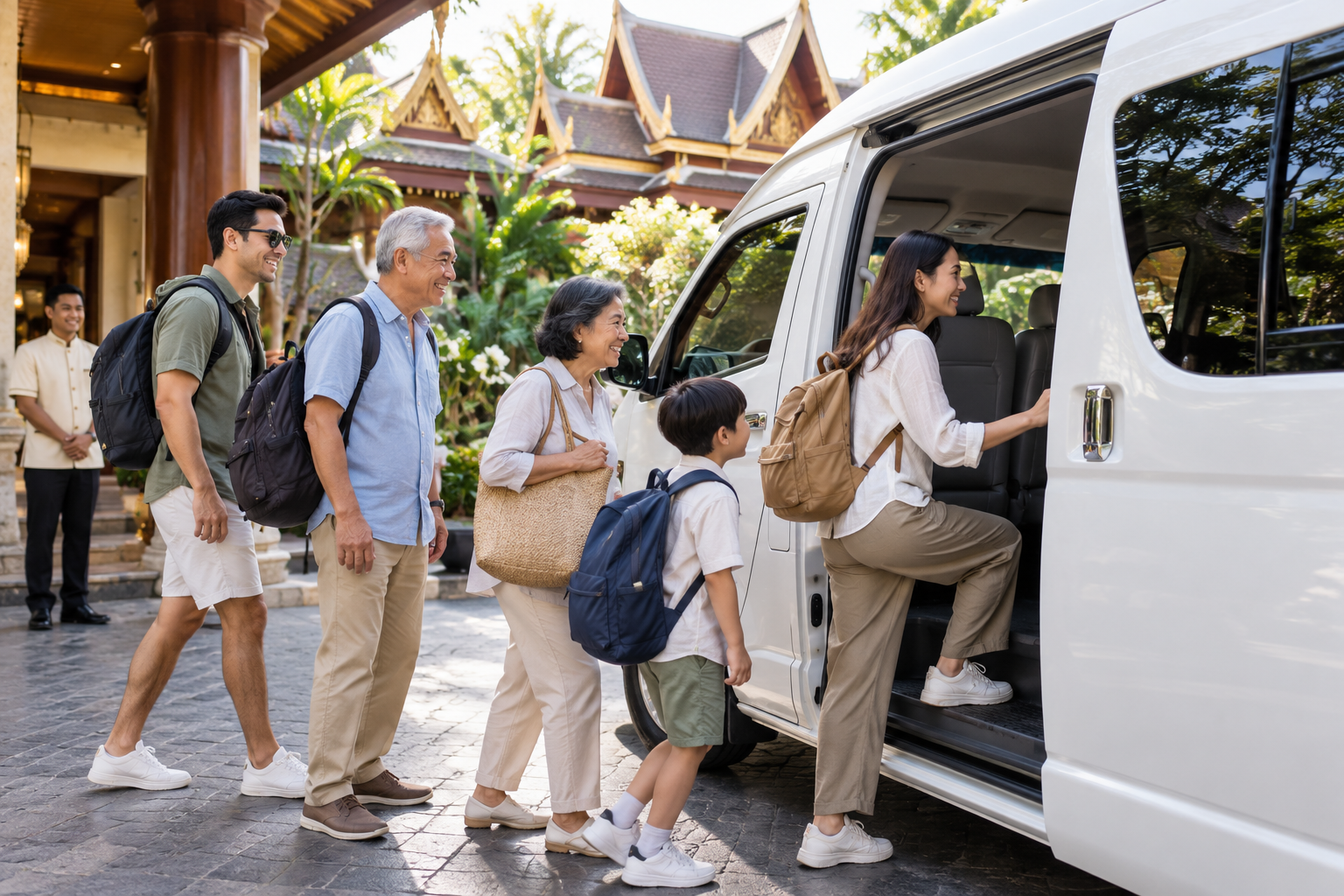
Start with the route decision, not a list of attractions
Before asking for a quote, decide what the day needs to accomplish. Is it a sightseeing day that returns to the same hotel? A transfer day with one meaningful stop? An arrival-day plan with luggage and check-in timing? Or the first stage of a longer route to another province? Those are different products, even when they use the same vehicle.
A clear route brief lets the driver plan practical details before the day starts: where the pickup can happen, whether bags need space throughout the day, where the group can meet after a walk, and which stop is flexible if traffic, rain, or energy changes. It also prevents a common mistake: building an itinerary around map pins without considering the order in which they actually fit.
Choose one headline and one optional chapter
For most groups, one headline experience is enough. In Bangkok, that might be temples and the river. Outside Bangkok, it might be Ayutthaya heritage, a green nature route, a market day, or a coast-bound hotel transfer. The optional chapter should support that main reason rather than compete with it. A cafe, meal, short viewpoint pause, or nearby local stop can work well. A second far-away attraction often does not.
This structure gives the route resilience. If a flight arrives late, if the group wants more time at the main stop, or if weather makes walking less appealing, the driver can shorten the optional piece without sacrificing the purpose of the day. That flexibility is particularly valuable for families, older travelers, and groups carrying luggage.
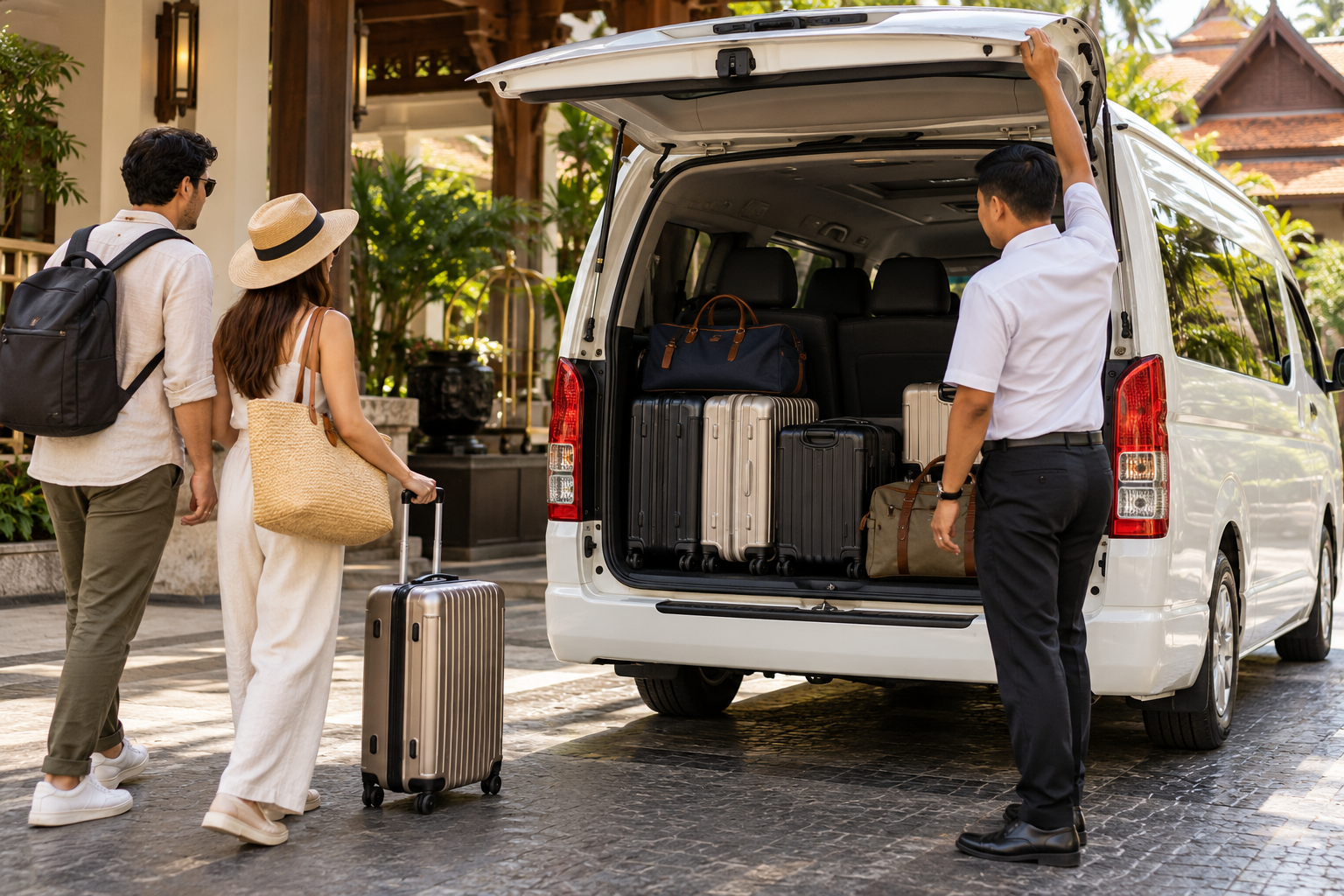
Plan around people, luggage, and walking comfort
Passenger count alone does not describe a private route. A couple with carry-on bags has different vehicle needs from a family with large suitcases, a stroller, cameras, or sports equipment. The same is true for walking. Some visitors enjoy a long heritage walk; others need shade, short distances, regular seating, and more air-conditioned resets. Share these details early so the route can be designed around the group rather than patched together on the day.
For older guests, a good private-van plan usually reduces unnecessary vehicle exits, protects meal and restroom breaks, and keeps the day focused on the most meaningful stop. For children, it helps to alternate one active section with one calm break. For photographers, light and waiting time matter more than adding a fourth location. A chauffeur-driven route can accommodate each of these priorities when they are stated before the quote is confirmed.
Use hotel pickup and final drop-off to simplify the day
Door-to-door pickup is one of the practical reasons to choose a private van. It removes the need to move bags to a station, negotiate separate taxis, or find the next driver after a stop. The same principle applies at the end of the route. A plan that finishes at the correct hotel, airport, pier, or next province is often better than one that returns to the starting point only because the itinerary was not thought through.
Tell the route planner whether you need a round trip, a one-way transfer with sightseeing, or an overnight continuation. Mention the hotel name or district, the final destination, and any non-negotiable arrival time. Current road, attraction, and weather conditions should always be reconfirmed near travel, so the route remains realistic rather than based on a generic promise.
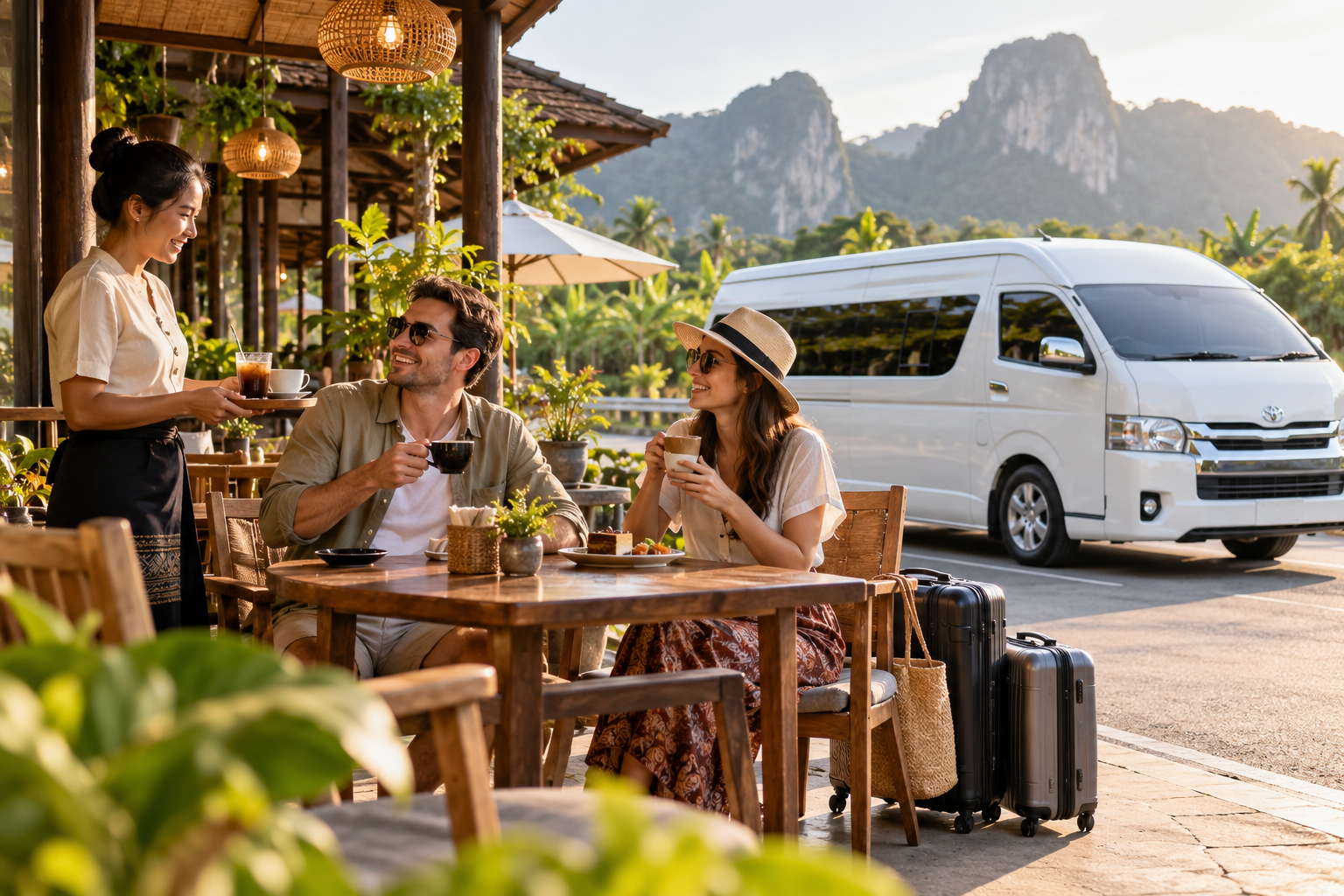
Build a route that still works if the day changes
Thailand travel is more comfortable when the itinerary has margin. Traffic, rain, hotel check-in, a longer lunch, or a child who needs a break can all change the ideal stop order. A well-planned private route does not claim that every hour is fixed. Instead, it identifies a primary stop, a secondary option, and a sensible way to return or continue.
Ask for a route with a decision point. For example, after the main heritage or nature stop, the group can choose between a relaxed meal, a short nearby add-on, or a direct hotel return. This is a better use of a chauffeur than booking a vehicle only to recreate a rigid group-tour schedule. The van stays valuable because it lets the group make one informed adjustment rather than losing the whole day.
Compare a private van with separate transport
Separate taxis, trains, and local transfers can work well for simple point-to-point travel. They become less convenient when there are bags, several people, remote meeting points, or more than one province in the same plan. Each handoff creates a new decision: where to store luggage, when to leave, how to meet the next driver, and what happens if the first segment runs late.
A private van does not remove every travel variable, but it keeps the group, luggage, and route logic together. That is often the better choice for an arrival day, a transfer with sightseeing, a family day, or an itinerary where the final hotel is outside the original city. For a short solo journey with no bags and one fixed destination, public transport may be simpler. The useful question is not whether a van is always better; it is whether the route has enough moving parts for one coordinated vehicle to add real value.
Examples of route shapes that work well
A Bangkok heritage day can pair hotel pickup with one temple or riverside area and a calm return. An Ayutthaya day can focus on the historical core with a meal and enough walking margin. A coastal transfer can leave Bangkok, make one carefully selected cultural or food stop, then finish at a hotel in Cha-am, Hua Hin, or farther south. A northern route can use a private van to link Chiang Mai hotel pickup, a mountain or temple headline, and a final drop-off without repeated transport changes.
The shared principle is simple: choose the route’s identity first. Then use internal planning guides to compare destinations rather than stacking them together. A traveler deciding between Ayutthaya, Kanchanaburi, Khao Yai, or a coastal handoff should pick the mood and comfort level that fit the group before asking the driver to connect them.
What to send for an accurate private-van quote
- Pickup hotel, airport, or exact meeting area, plus preferred start time.
- Final drop-off point and whether the route is round trip, one-way, or overnight.
- Number of passengers, large suitcases, carry-ons, strollers, camera equipment, or other bulky items.
- One must-see priority, one optional stop, and any stop that can be skipped if conditions change.
- Walking comfort, children or older guests, meal preferences, and any need for shorter walking sections.
- Flight details or fixed hotel, pier, or airport timing that the route must respect.
These details give the chauffeur enough context to propose an itinerary that works in the real world. They also let you compare route options honestly before booking, rather than discovering constraints only after the vehicle arrives.
Practical booking answer
The best private van itinerary in Thailand is not the one with the most stops. It is the one that connects the right pickup, one meaningful route idea, the group’s luggage and comfort needs, and the right final drop-off. Share your travel day in that form, keep a little flexibility after the main stop, and let the chauffeur route the journey around how your group actually wants to travel.