
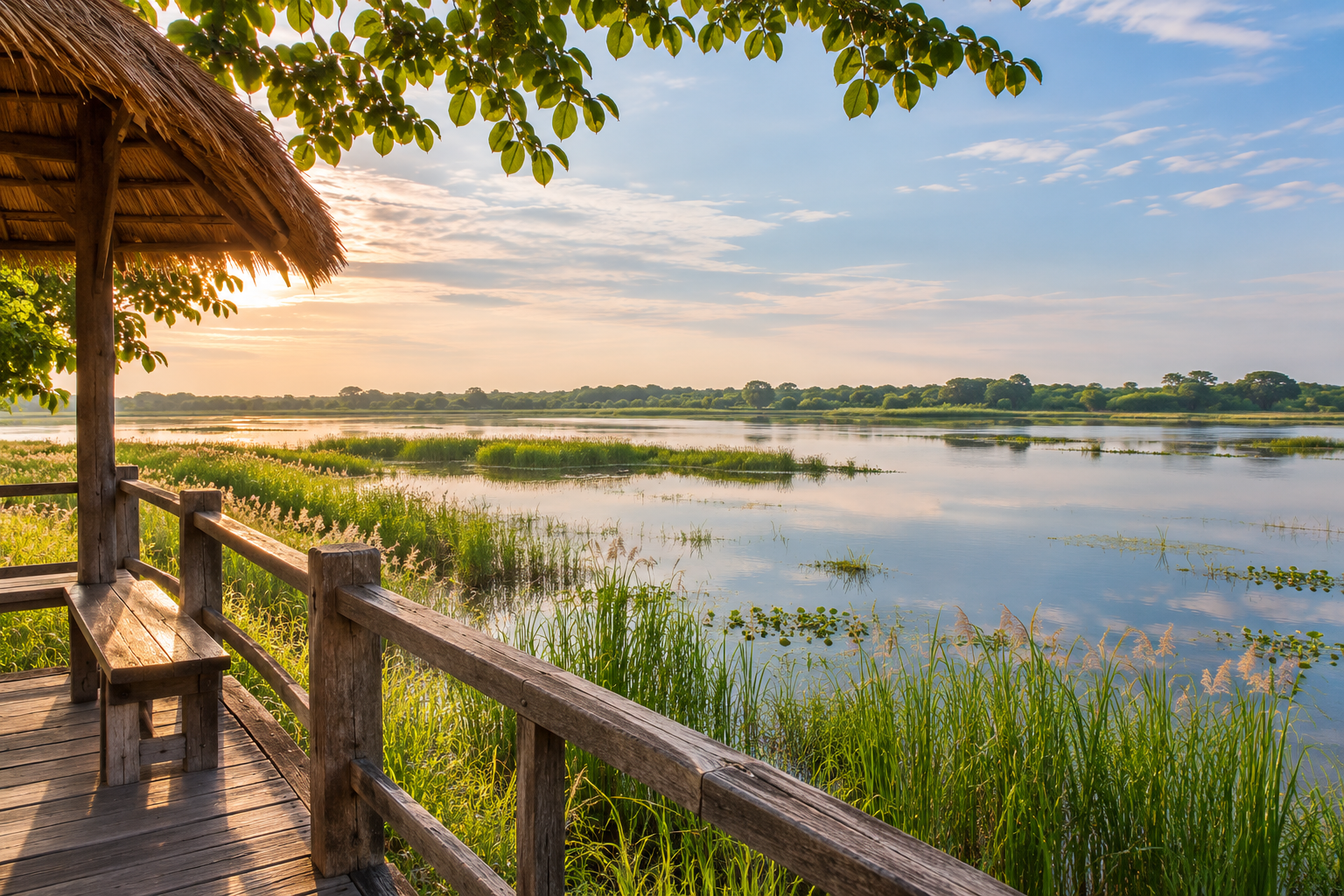
Should you stop briefly or spend a night in Nakhon Sawan?
Choose a short Nakhon Sawan stop if your main objective is to break a northbound road journey with a meal and one city landmark. Choose an overnight stay if Bueng Boraphet is the reason for coming: sleeping nearby lets you plan a dedicated morning at the wetland without attaching it to an early departure from Bangkok. A chauffeur-driven private van is particularly useful when your group has luggage, different walking preferences, or a confirmed onward hotel. The booking should connect those needs, rather than simply promise every attraction in the province.
This is a route-planning recommendation, not a fixed operating schedule. Lake access, boat arrangements and attraction opening details need checking for your travel date. Think of the visit as two separate experiences: a city arrival afternoon and a nature-focused morning. If only the city fits, enjoy that smaller itinerary instead of treating the lake as a compulsory extra.
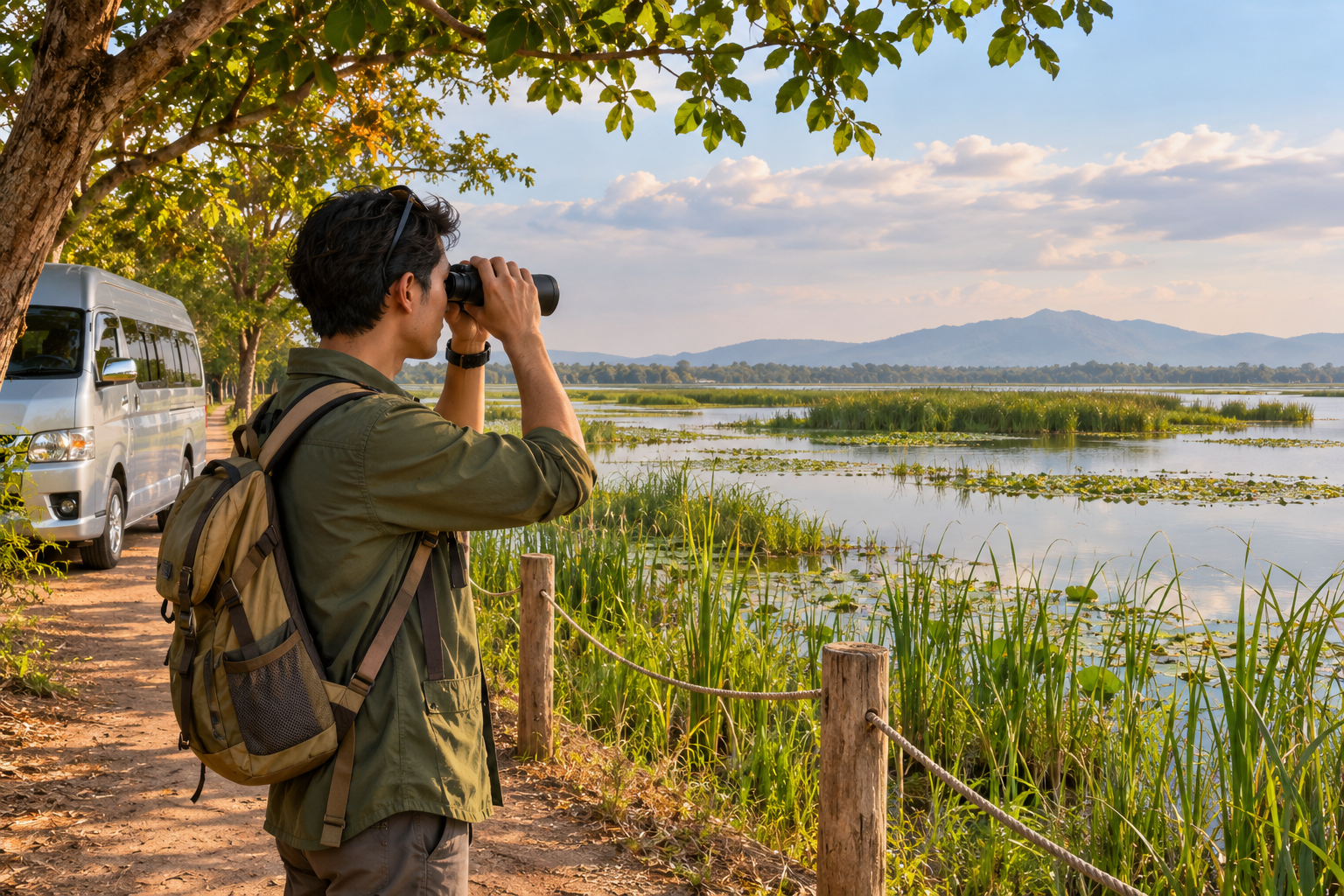
What makes this a worthwhile northbound stop?
The Tourism Authority of Thailand describes Nakhon Sawan as a gateway between central and northern Thailand. Its destination overview pairs Bueng Boraphet with Pak Nam Pho, the curved Phasan landmark, and Wat Khiriwong's golden chedi. These are distinct reasons to pause: the lake provides wetland scenery, Phasan offers an architectural focus, and the temple adds cultural context. They should not become interchangeable pins on a map.
For a group continuing north, the useful question is which experience justifies leaving the through-route. A brief architectural visit can work as a deliberate break. A wetland morning needs more commitment, especially if someone hopes to photograph birds. Discuss the following day's hotel before fixing the stop count. An itinerary that looks generous locally can still create an uncomfortable late arrival at the next destination.
Why a lake visit needs a specific meeting point
Bueng Boraphet is a large wetland destination with different approaches, not a single lakeside address. The independent North Thailand Birding guide distinguishes birding areas on its northern and southern shores and describes Nakhon Sawan as a practical accommodation base. That guide explicitly dates its detailed field information to February 2020. It supports the distinction between shores, but does not establish that a particular boardwalk, jetty, operator or service is functioning today.
Before booking, ask for the exact intended access point and what the visit includes. A shore-based look at the water, an aquarium visit and a specialist birdwatching outing are different products. The provincial tourism site describes boats, birds, lotus flowers and an aquarium, but its page is destination promotion rather than a dated reservation confirmation. Do not interpret the availability of an attraction description as a confirmed boat departure.

This distinction matters for pickup coordination. Send the driver the agreed meeting pin, local contact and expected finish time once the activity is confirmed. Avoid booking a transfer to the broad lake name and trying to decide the shore on arrival. If a separate guide is involved, establish who makes the final decision about the meeting location.
Option one: a compact city break between hotels
For travelers passing through, build the stop around lunch and one priority. Phasan may suit a group interested in architecture and photographs; Wat Khiriwong may suit those who prefer a cultural visit. Ask the planner to check access, walking requirements and suitable parking before choosing. Keep a second attraction optional until the actual pickup time, road conditions and onward journey are clear.
The provincial website publishes short city-route suggestions, but these are local sightseeing outlines. They should not be read as complete door-to-door schedules from Bangkok. Its shortest outline allocates time to several attractions without resolving your hotel pickup, meal, parking or onward transfer. For a private quote, request a journey plan based on your actual addresses rather than importing the advertised headline duration.
A useful hypothetical example is a family traveling between two hotels with large suitcases. Their non-negotiable requirement might be arriving at the second hotel before dinner. In that case, agree a latest departure from Nakhon Sawan and select a single stop that fits it. The decision is about protecting the wider holiday, not winning a local sightseeing checklist.
Option two: an overnight stay with a protected morning
For the overnight version, use arrival day for hotel check-in, a meal and one city visit. Leave time to settle the next morning's arrangements before the local contact becomes unavailable. Confirm whether breakfast can fit the departure plan; if not, ask the hotel what alternatives it offers. None of those services should be assumed from a room reservation alone.
The following morning belongs to the lake activity you have actually booked. Decide in advance whether the group wants casual scenery, a shore walk or a specialist outing, then leave enough time afterward to return, freshen up and collect luggage. Where hotel checkout conflicts with the activity, resolve storage and vehicle loading beforehand. A van full of luggage changes the practical arrangement for a morning stop.
This structure is especially useful when one traveler values nature photography and others prefer a relaxed breakfast. A split schedule can be considered, but only if the transport and meeting arrangements are explicit. One booked vehicle cannot simultaneously provide independent transfers for two groups. Price any extra movement separately and choose a single rendezvous everyone understands.
Birds, flowers and seasonal expectations
The specialist guide favors early and late visits over the hottest middle of the day and identifies November to March as a useful period for wintering birds. Treat that as historical seasonal context, not a forecast for your particular morning. Water levels, visibility, disturbance and where birds choose to feed can all affect what a visitor encounters. Avoid planning the purchase around a guaranteed species photograph.
Likewise, promotional references to lotus flowers do not prove that a particular patch will be flowering on your date. Ask the local activity provider what has actually been seen recently and whether your proposed route reaches it. If scenery matters more than a wildlife checklist, say so: the planner can focus on a suitable viewing experience rather than promising a specialist result.
Keep a fallback that still fits the purpose of your trip. A city visit or a confirmed indoor attraction may be preferable if the planned water activity cannot proceed. Check the alternative's opening and admission arrangements first. Substituting another unconfirmed attraction does not solve the original uncertainty.
When the private van earns its place
A private van adds practical value when it connects hotels, luggage and an agreed lake access point into one coordinated journey. It also gives a mixed-interest group a clear place to regroup after walking. Ask how the driver remains contactable while you are away from the vehicle, where pickup is permitted and what happens if the activity finishes later than expected.
Travelers making only a simple intercity journey should compare that arrangement with public transport plus a separately arranged local transfer. The van is not automatically the best choice for every solo traveler. Its strongest case here is a group that wants several coordinated movements or is carrying enough luggage to make repeated transfers awkward. A chauffeur is also not automatically a bird guide: book specialist interpretation separately if identification is central to the visit.
Compare the stop with nearby itinerary priorities
If your main interest is historic ruins, the journal's Kamphaeng Phet guide offers a different reason to pause on a northern journey. Do not combine two substantial visits merely because both appear on the same regional map. Choose the experience your group most wants, then give the other a separate day or leave it for another trip.
For a broader hotel-to-hotel journey, the multi-stop Thailand private-van guide helps frame luggage, pacing and transfer decisions. Nakhon Sawan works best as a purposeful part of that wider itinerary. An overnight is worthwhile when it creates usable morning time; it adds less value if everyone intends to leave immediately after breakfast without visiting the lake.
Send a quote request that can be answered clearly
- Give the travel date, pickup hotel and final hotel, including whether the booking returns to Bangkok or continues north.
- List adults, children, large suitcases and unusual items such as a stroller or photography equipment.
- Choose a city stop or overnight format and name the one experience you most want to protect.
- State walking limits, step concerns and any assistance needs so the planner can check the proposed access.
- For a lake outing, provide the confirmed shore, meeting pin, activity contact and expected duration, or ask who will arrange them.
- Request an itemized explanation of vehicle service, waiting, driver overnight arrangements, tolls, parking, overtime and any separate guide or boat charges.
- Identify the latest acceptable arrival time at the next hotel and the fallback you would accept if the lake activity changes.
Ask Mister Tour Thai to build the quote around those decisions. A clear scope makes it easier to compare offers and avoids confusing transport with a fully arranged nature excursion. The most satisfying Nakhon Sawan visit gives the city and wetland enough room to be enjoyed while keeping the rest of your Thailand journey manageable.