
From Udon Thani, set aside the morning for Phu Phrabat Historical Park in Ban Phue district, northwest of the city. Start at the visitor centre and ask for a walk that takes in Ho Nang Usa and the painted shelter known by two names, Tham Wua and Tham Khon. For a shorter outing, stop for lunch in Ban Phue on the way back. If the Buddhist boundary stones are what brought you here, give the afternoon to the second part of the World Heritage site at Wat Phra Phutthabat Bua Ban.
The images in this guide are AI-generated illustrations. For photographs of the monuments and their original markings, see the UNESCO photo gallery.
Which Udon Thani heritage day suits you?
At Phu Phrabat, much of the evidence is still out on a sandstone hill. You can stand at the edge of a clearing and see how people marked out a place for worship, then look up and pick out the masonry they fitted under a natural overhang. Ban Chiang tells a different story through excavated burials, pottery and metalwork from a prehistoric farming settlement in Nong Han district. Choose Ban Chiang for a museum day. Choose Phu Phrabat if you would happily spend a morning on foot tracing the outline of a ceremonial space on the ground.
If both places matter to you, give each an outing of its own from your base in Udon Thani. This works particularly well for a family whose interests differ. Give the museum reader time with the burial displays on one day and the photographer a morning at the rock shelters on the other.
Look above and below Ho Nang Usa
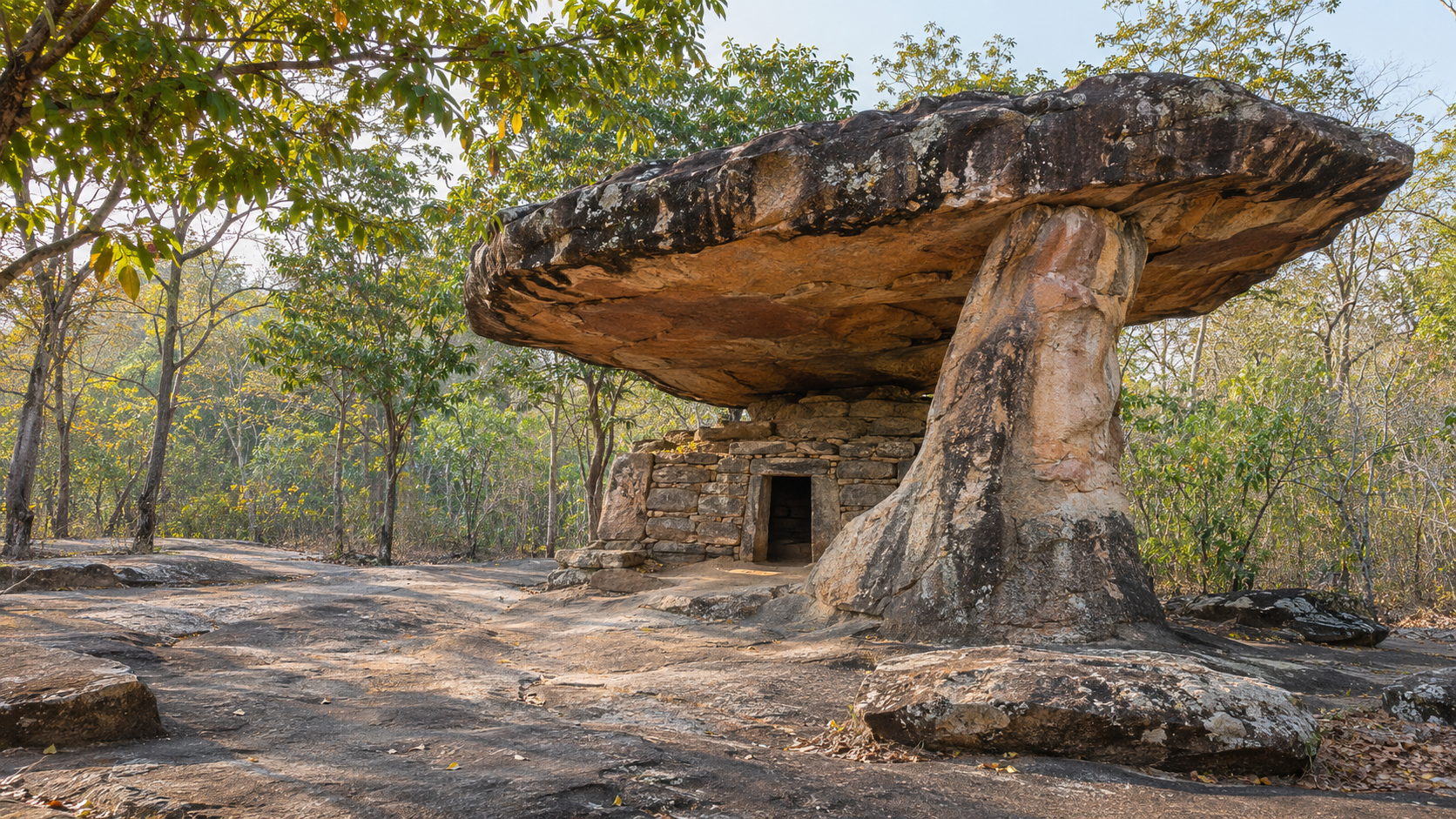
At Ho Nang Usa, the eye goes straight to the broad slab balanced on a narrow sandstone support. Look just below that slab. Smaller stones have been laid to enclose a room, complete with a doorway and a window. From ground level you can trace the change from the naturally weathered rock to the blocks someone chose and fitted together. The tower takes its name from the local story of Nang Usa and Thao Barot. A local guide can tell you where the tower fits into the story as people in Ban Phue tell it.
Now look down. Upright stones around the shelter marked the limits of ground set aside for Buddhist ceremonies. The term sīma refers to that boundary. At the tower, archaeologists recorded five surviving markers and three sockets cut into the bedrock where others once stood. An empty socket helps explain the plan just as a standing stone does. From the path, try to pick out the space between two markers. Photographing only the capstone crops out much of what makes this place unusual.
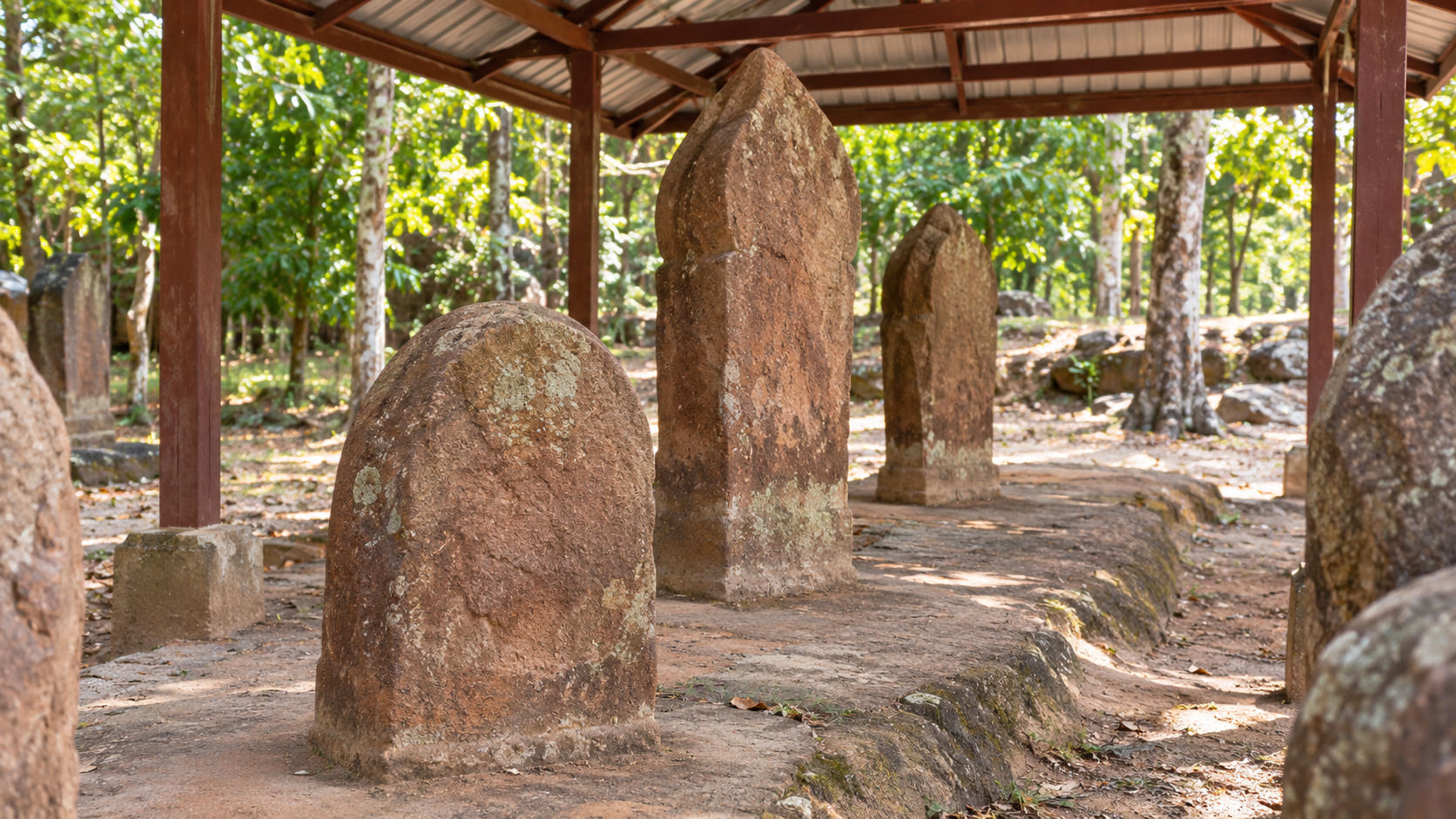
Across the Khorat Plateau, Buddhist communities erected these stones during the Dvaravati period, here dated to the seventh through eleventh centuries CE. Many markers elsewhere were later moved and used again. Phu Phrabat preserves an exceptional number where people originally set them, one reason UNESCO inscribed the landscape in 2024. Their positions tell us where a ceremonial space began and ended. Exactly which rites took place in each enclosure remains an open question.
One painted shelter, two sides to see
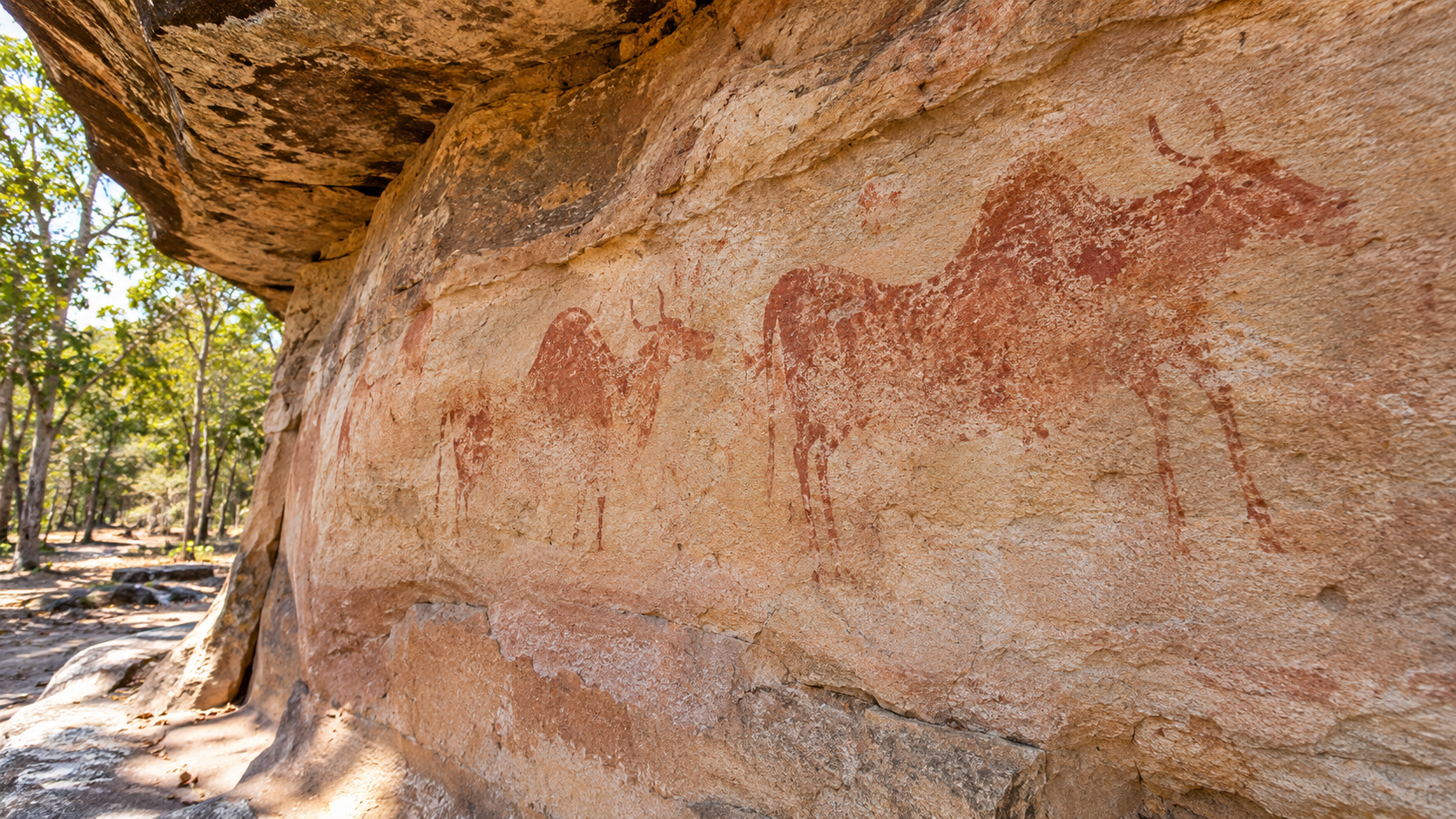
It takes only one stop to see the paintings at Tham Wua and Tham Khon when both sides are open. The park describes them as opposite faces of one large overhang. On the eastern wall at Tham Wua, look for the humps along the backs of cattle painted in red. On the western face at Tham Khon, seven red human figures walk in a line. Higher up, a red figure overlaps a white grid. That overlap gives you a way to read the order in which marks were made, even when you cannot assign them a calendar year.
UNESCO records paintings at 47 shelters across the property. For a first visit, this one rewards a longer look. Ask a guide to point out a calf or the change of colour high on the wall, then let your eyes follow the panel from the marked viewing area. Leave the pigment untouched. The paintings belong to the site's prehistoric evidence. The World Heritage Committee called for more dating work on the rock art.
A park morning with the option of Bua Ban after lunch
For the shorter outing, leave from your Udon hotel after breakfast and go straight to the visitor centre. As a planning allowance, give the main park two to three hours on site, with the drive each way counted separately. Ask staff to mark the day's available path to your two priorities and agree where the driver will wait. If one person wants a long look at the paintings and another wants a short walk, settle on a place to sit and a meeting time before you set out.

For the longer day, ask park staff about visiting arrangements at Wat Phra Phutthabat Bua Ban before you break for lunch. Put the full name in the booking request. Bua Ban, also written Buaban, is the second component of the World Heritage property. Bua Bok is a different stop, known for a shrine to a Buddha footprint. Send the map pin for the Bua Ban stone groups as well as the temple name, and have the driver confirm the visitor entrance.
After lunch, take the van to Bua Ban and look for the stones known as Group Two. There are 24 markers here, with three set along each of eight directions around a rectangular sacred space. The inner stones are tallest. Some bear shallow carvings of Jataka stories, accounts of the Buddha's previous lives. Look along one group of three before trying to take in the whole arrangement. After seeing the gaps around Ho Nang Usa, you can appreciate how much information survives here in the height, spacing and carved faces of the stones.
Plan the walk around the people going
On a hot day, put the open rock terraces early in the walk and carry drinking water out of the van. After rain, ask staff about footing on the exposed sandstone before committing to a longer circuit. For anyone who uses a walking aid, describe the distance they find comfortable and whether they can manage a step into a vehicle. The Fine Arts Department lists an electric shuttle to the Ho Nang Usa area. Ask about service on your date, boarding height and the walking surface between the drop-off and the view you want.
A chauffeur can hold luggage and meet the group after the walk. If you want help identifying a faint figure or hearing the Nang Usa story in English, request a guide separately. The park advertises visits in Thai and English. Its enquiry numbers within Thailand are 042 219 837 and 042 219 838. Before leaving Udon Thani, confirm the guide's language and meeting place, the last admission time and how to pay. If you have an evening train or flight, tell the driver when you need to be at the station or terminal and make Bua Ban an optional stop.
What to send for a private van quote
Give the operator your travel date, pickup hotel, party size and final drop-off. Give the number of bags if you are changing hotels, and say whether a folding wheelchair or pushchair needs luggage space. Ask for two totals for the same group. The first should cover the historical park, waiting during the walk, a lunch stop and the return to Udon. The second should add the drive to Bua Ban and time there. Specify whether you are continuing to a hotel in Nong Khai so the operator can price the actual last leg.
Ask what the quoted hours cover, how extra waiting is charged and whether a guide, admissions or park transport are separate. One detail worth adding in your own words is what you most want to see. For example, write “We’d like to see the cattle paintings. One of us can walk for twenty minutes at a time. We’re happy to skip Bua Ban if the first walk takes longer.” That lets the guide choose a walk and the driver work out where to meet you.