

Ban Chiang by private van is best planned as a focused cultural excursion from Udon Thani, with enough time to understand the archaeology rather than simply photograph pottery. Choose a hotel-to-hotel day if you are already staying in the city. Choose an overnight in Udon Thani if reaching the region would otherwise consume the visiting window. A chauffeur connects the journey; a well-defined museum visit gives it purpose.
The central decision is how to protect your time at Ban Chiang National Museum and the archaeological visitor area. An arrival-day detour, a dedicated day and a stop during a longer Isan journey are different products. Ask Mister Tour Thai to quote the version that fits your actual addresses and travel dates, with admissions, interpretation and waiting arrangements clearly identified.
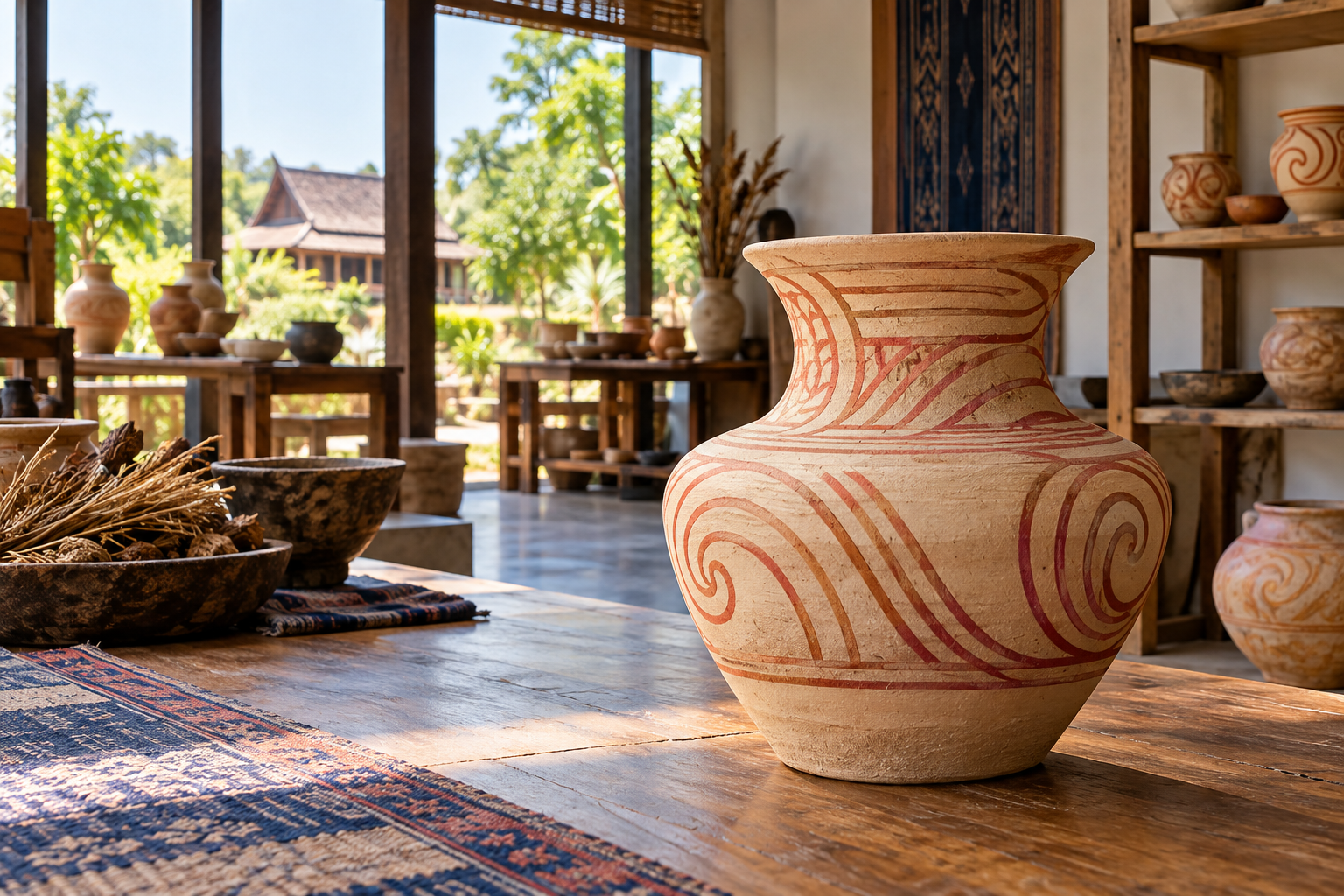
Why Ban Chiang deserves a different kind of heritage day
Ban Chiang is a prehistoric habitation and burial site in Udon Thani province. UNESCO inscribed it on the World Heritage List in 1992. Its importance concerns the development of settled communities, farming, ceramics and metalworking. This is a visit about everyday lives and the evidence people left behind, rather than a circuit of monumental temple ruins.
Penn Museum describes scientific excavations conducted with Thailand's Fine Arts Department in 1974 and 1975 and continuing research into the finds. That research perspective is useful for visitors: a decorated vessel becomes more interesting when you ask how it was made, used and discovered. Avoid building expectations around sweeping claims about the world's first civilisation or a single uncontested date for every object.
Before booking, consider whether everyone enjoys reading displays and looking closely at small objects. Travelers seeking panoramic scenery or extensive outdoor ruins may want another primary destination. A mixed-interest group can still enjoy Ban Chiang when the museum is the clear anchor and the rest of the day includes a relaxed meal and time to pause.
Option one: a dedicated excursion from Udon Thani
For travelers already based in Udon Thani, request pickup from the hotel, a museum-led Ban Chiang visit, lunch and a return to the same hotel. Ask the planner to confirm which archaeological visitor areas are accessible on your date and how they connect to the museum. UNESCO describes a protected excavation area and a nearby site museum, but this does not confirm today's admission arrangements.

Let the verified visiting window set the departure time. A useful proposed sequence is museum orientation, a break, then the accessible archaeological component before returning. It is a planning sequence, not a fixed operating schedule. If a guide recommends reversing the order, the point remains to give interpretation and observation enough space without squeezing them between unrelated attractions.
This option keeps luggage at your accommodation and makes it easier to adjust the pace. Tell the operator your preferred return time and one essential experience. If departure is delayed, shorten the optional village stroll or lunch stop rather than silently reducing the museum to a rushed circuit. Agree where the chauffeur will wait and how to contact them.
Option two: arrive, stay overnight, then visit
An overnight in Udon Thani can protect the cultural visit from uncertain arrival timing. After an incoming flight, train or long road journey, check in and rest; schedule Ban Chiang during a confirmed visiting window on the following day. This is particularly useful when museum interpretation is the reason for the trip and missing the venue would undermine the whole plan.
Compare the complete arrangement, including arrival transfer, hotel, excursion and onward movement. A low transfer price alone does not show the cost of the whole stay. Ask whether the same vehicle and chauffeur remain assigned, whether overnight driver expenses apply, and when service stops each evening. A booking across two calendar dates does not establish continuous vehicle availability.

An overnight adds little if you arrive late and must leave early the next morning. Check that it creates usable visiting time before changing hotels. For travelers starting in Bangkok, request a separate comparison between reaching Udon Thani independently and beginning the chauffeured service there, or making the region part of a longer road itinerary with suitable breaks.
Option three: include Ban Chiang in a longer Isan journey
A transfer-day visit can work when the onward destination, museum availability and luggage arrangements are planned together. Send both accommodation addresses, not just province names. Ask for a route showing driving, visiting, meal and rest allowances separately. A place appearing close to a route on a small map does not demonstrate that its detour fits your arrival deadline.
The existing Nakhon Ratchasima and Phimai private van guide covers a different heritage interest in the northeast. Treat it as context for building a longer journey, not evidence that Phimai and Ban Chiang form an easy single-day combination. Separate the archaeological themes and give each region its own realistic transport calculation.
Ask which optional activity would be dropped if the transfer runs late. If the answer is the museum that motivated the stop, a dedicated excursion is probably a better fit. Avoid attaching Ban Chiang to a tight same-day flight departure without a provider-confirmed plan and a clear latest departure from the final visit.
Make the museum visit useful for your group
Give your planner a short description of your interests: archaeology, ceramic design, early agriculture or a general introduction to Isan history. Ask whether interpretation is available in your preferred language and whether a licensed guide can be arranged. Chauffeur coordination and specialist guiding should be priced and described separately; do not assume that one person automatically provides both services.
For children, choose a small number of questions rather than a target number of galleries. How might a pot have been shaped? What can an object reveal about cooking or storage? Follow current museum photography rules and discuss any burial-related displays with the adults in your group beforehand. The provider can help establish whether the proposed visit suits your family's interests.
Do not promise a pottery workshop merely because Ban Chiang is associated with ceramics. If practical craft activity matters, ask the operator to identify a specific current provider, confirm its availability and describe the activity. Keep this optional until confirmed, including language support, duration and payment conditions. A museum visit remains worthwhile without a workshop.
Walking, weather and practical comfort
A private van reduces transport coordination between stops but does not establish step-free access inside a venue. Describe walking tolerance, difficulty with stairs, wheelchair dimensions or the need for frequent seating. Request confirmation of the actual route from the permitted drop-off to the visitor areas. General assurances about a comfortable vehicle do not answer questions about entrances or toilets.
Leave room for a meal and rest rather than filling every gap with a new stop. In wet conditions, ask which outdoor elements can be shortened; in hot conditions, discuss exposed walking and breaks. Museum availability should be checked before treating it as an indoor fallback. Avoid relying on historical opening information copied from an old itinerary.
What to include in a comparable private van quotation
Send the date, exact pickup and drop-off addresses, number and ages of passengers, luggage quantities and dimensions, and any stroller or mobility equipment. Request the proposed vehicle's seating and luggage arrangement and suitable child restraints where needed. A generic van photograph cannot show whether your particular group and bags fit comfortably.
Ask each proposal to identify service hours, waiting time, overtime terms, fuel, applicable tolls, parking and any driver overnight costs. List museum admission, meals, guiding and optional activities as explicit inclusions or exclusions. Clarify cancellation and itinerary-change terms. These details make two offers comparable and reduce the chance that an attractive initial price excludes the experiences you actually want.
Use the Thailand multi-stop chauffeur planning guide to organize the broader service brief. For a luggage-carrying transfer, agree how bags are handled while you visit and keep essential documents and medication with you. If your incoming transport is delayed, establish who you contact and how waiting charges or sightseeing changes are handled.
A booking request you can adapt
“We would like a Ban Chiang cultural visit from Udon Thani. Please compare a dedicated hotel-to-hotel excursion with an arrival transfer, overnight stay and visit the following day. Our travel dates, accommodation addresses, passenger details and luggage are below. The museum is our priority. Please confirm current access, realistic driving and visiting allowances, guide options, inclusions and the latest return time.”
Add any onward deadline and identify what you would happily leave out. This gives Mister Tour Thai enough detail to prepare a useful proposal without assuming that every attraction in the province belongs in one day. Choose the itinerary that preserves the experience you came for and leaves your group comfortable at the end of the journey.
Research sources and date-specific checks
Background was checked against the UNESCO Ban Chiang listing, Penn Museum's Ban Chiang Project and TAT's regional itinerary description. These support heritage context, not current hours, fares or access. Confirm those details for your dates. Images are AI-generated editorial illustrations, not documentary photographs of the museum, its collection or the archaeological site.