
Choose your overnight base before booking the van
For Tham Lod Cave, a private van day from Pai is the clearest choice if you want to keep the same hotel and make the cave your main outing. An overnight near Pang Mapha makes more sense if you want time around the cave at dusk or are continuing towards Mae Hong Son. Treat a departure from Chiang Mai as a separate mountain transfer to plan carefully, rather than assuming this is another short excursion from the city.
The key booking distinction is between the road journey and the cave visit. A chauffeur brings your party to the visitor area, handles the agreed waiting time and takes you onward. Inside, the local cave guide manages the visit, including whichever walking and bamboo-raft sections are available. A vehicle booking alone does not establish that those services are included or that every chamber will be accessible.
Which Tham Lod, and what is there to see?
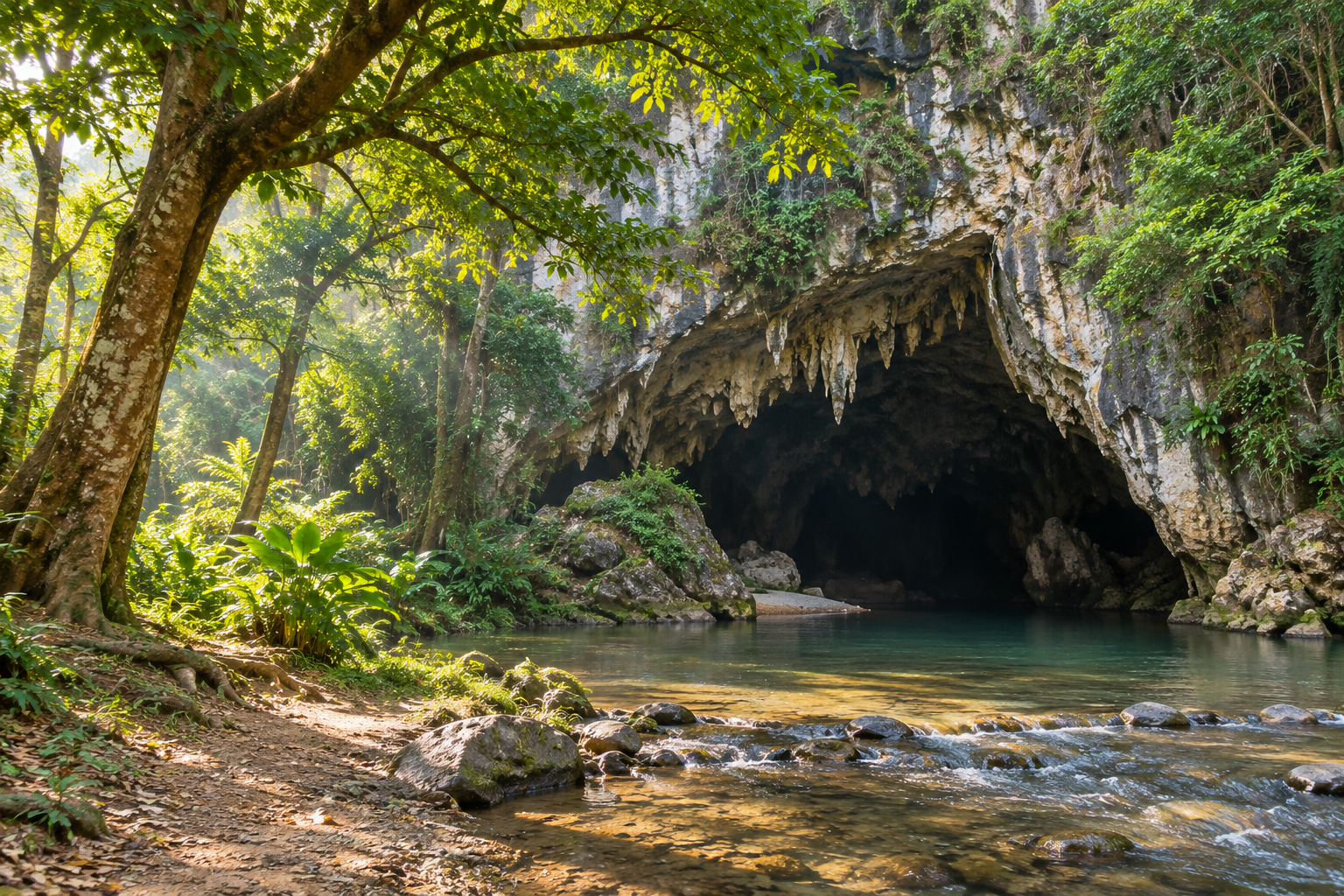
This guide concerns Tham Nam Lod in Pang Mapha district, Mae Hong Son province, near the settlement also known as Soppong. Include that full location in your enquiry: Thailand has other attractions called Tham Lod. The northern cave belongs to a landscape of limestone hills and forest, with the Nam Lang River passing through the rock. The water is part of the visit, not just scenery outside the entrance.
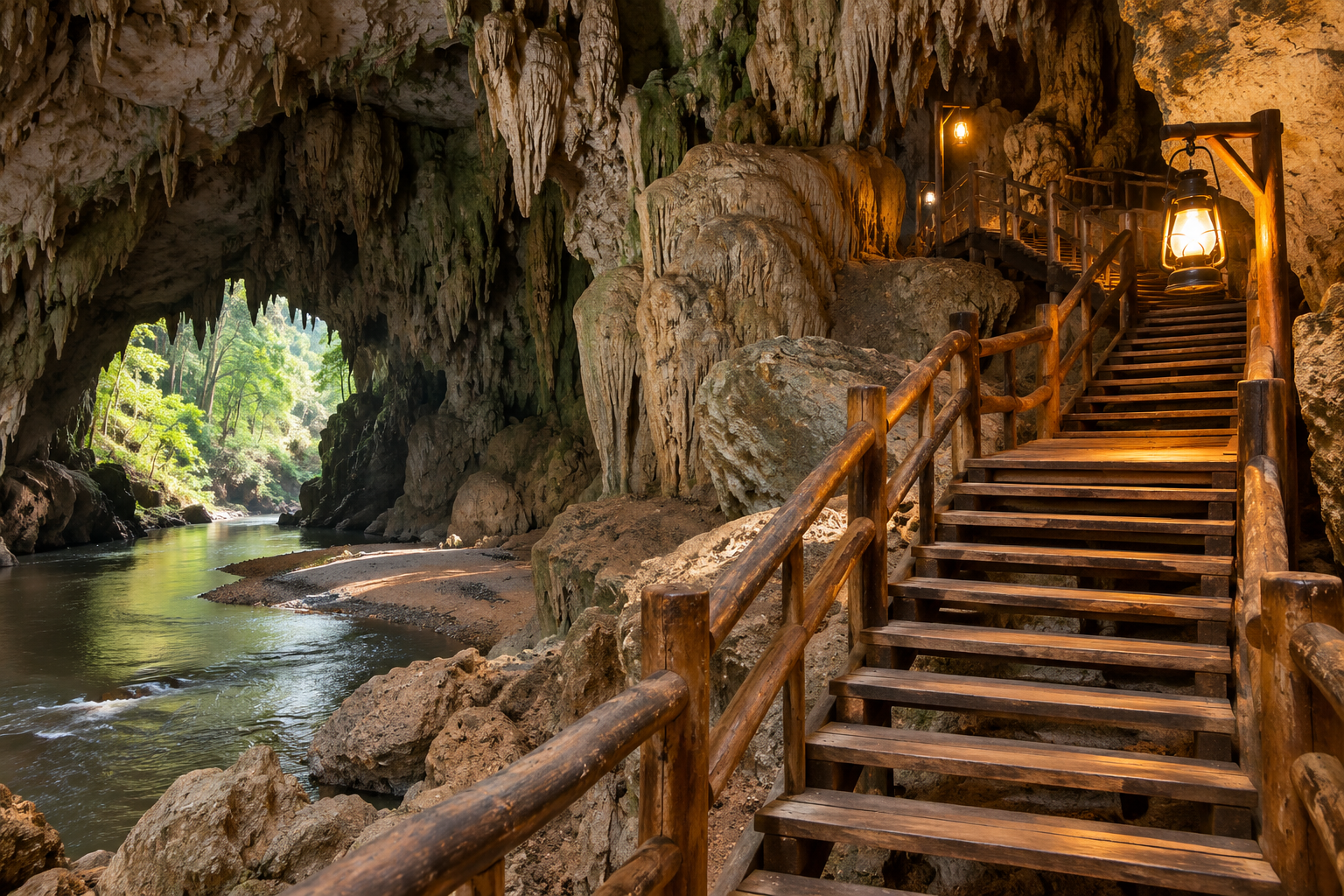
The Tourism Authority of Thailand describes three principal sections, Sao Hin, Tuk Ta and Pee Man, with limestone formations and archaeological interest. Regional descriptions also identify wooden coffins in the cave. These are reasons to explore slowly with interpretation, rather than photograph one entrance and leave. Published accounts differ on archaeological dates and on how cave length is measured; neither an exact age nor an underground distance is necessary for choosing your transport.
Expect changes in level and light. Local operators describe lantern-led exploration, uneven surfaces and steep wooden stairs to upper areas. A scenic raft photograph can conceal how much walking surrounds it. Before committing, describe your group's actual abilities to the cave team and ask which sections match them. A short visit should be an agreed option, not an assumption that every part of the cave has an easier equivalent.
Option one: a focused day from Pai
A Pai return works well for visitors who already have several nights there and prefer not to repack. Local accommodation sources place the cave area roughly 50 kilometres from Pai, reached along Highway 1095 and a turn towards Tham Lod village. That is geographical context, not a promised driving time: mountain curves, pickup location, conditions and breaks all affect the day. Ask your driver to quote the entire return outing with waiting, not two unrelated transfers.
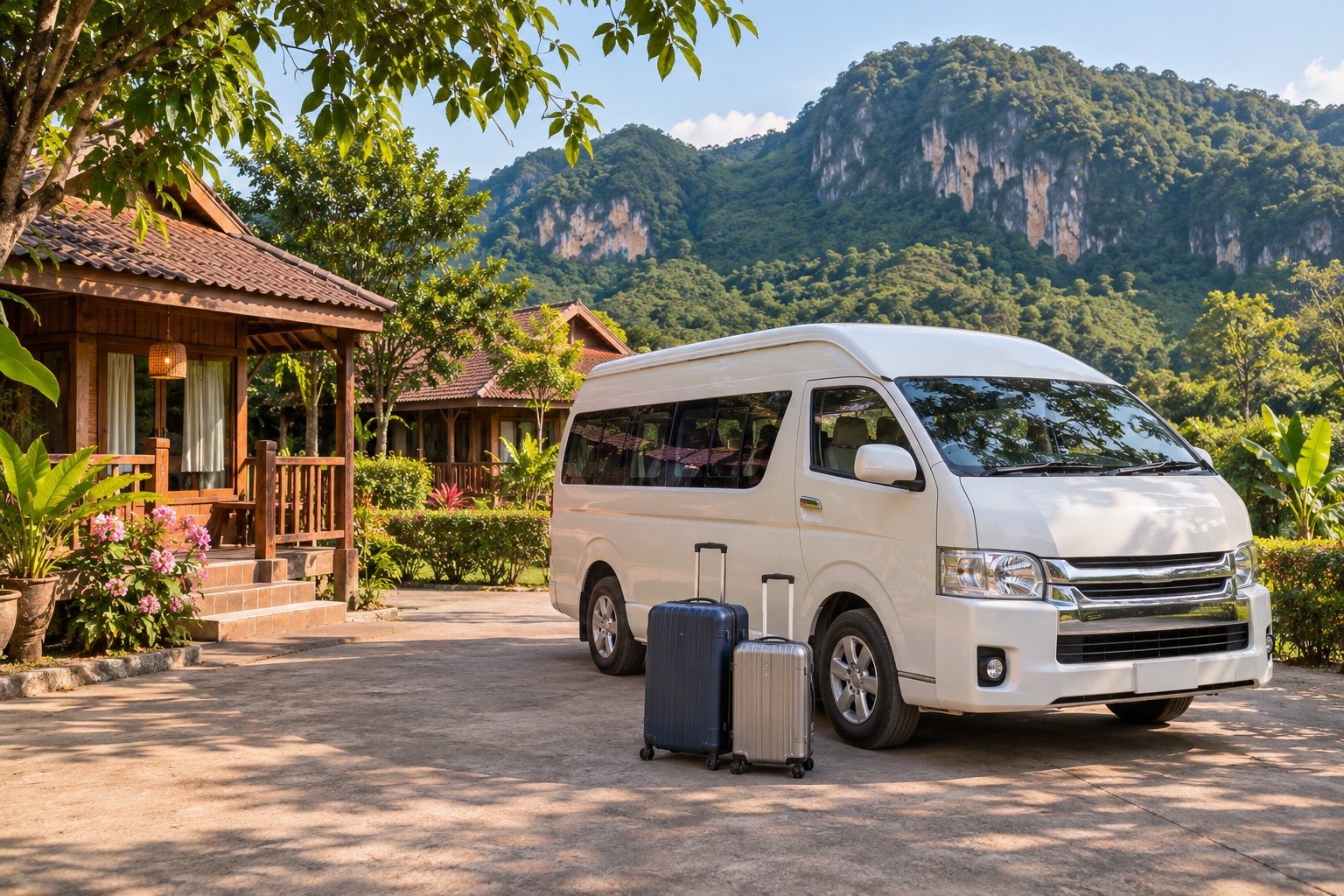
Build the day around three commitments: travel to the cave, the confirmed visit, and a meal with time to recover before the return. Keep any viewpoint optional. If the cave is the reason for travelling, giving a scenic stop priority can leave the main experience squeezed against the afternoon departure. The useful flexibility of a private van is the ability to omit that extra stop without reorganising a shared group's itinerary.
For example, a family staying in Pai could request a morning pickup, a refreshment break if needed, the available cave circuit and lunch before returning. This is a proposed sequence, not an operating timetable. The departure should follow the guide's current entry arrangements and the family's preferred return window. Do not add sunset viewing at the last minute without checking how it changes the chauffeur's duty period and the journey back.
Option two: sleep near Pang Mapha
An overnight removes the need to return to Pai immediately after the visit. It suits travellers who want a quieter evening, have a particular interest in the cave landscape, or are moving onward towards Mae Hong Son. Local lodging exists around Tham Lod, but confirm the actual property, room and arrival arrangements before fixing transport. A general reference to a village stay does not establish a room reservation or the standard your group expects.
Cave Lodge and other local accounts describe swifts returning around dusk near the cave exit. Treat this as an optional wildlife observation, with no promised number of birds or guaranteed display. Staying nearby gives you more room to wait without combining the observation with a return to Pai. Ask locally about the appropriate viewing approach and meeting point; the place used for watching outside need not be the place where a cave tour finishes.
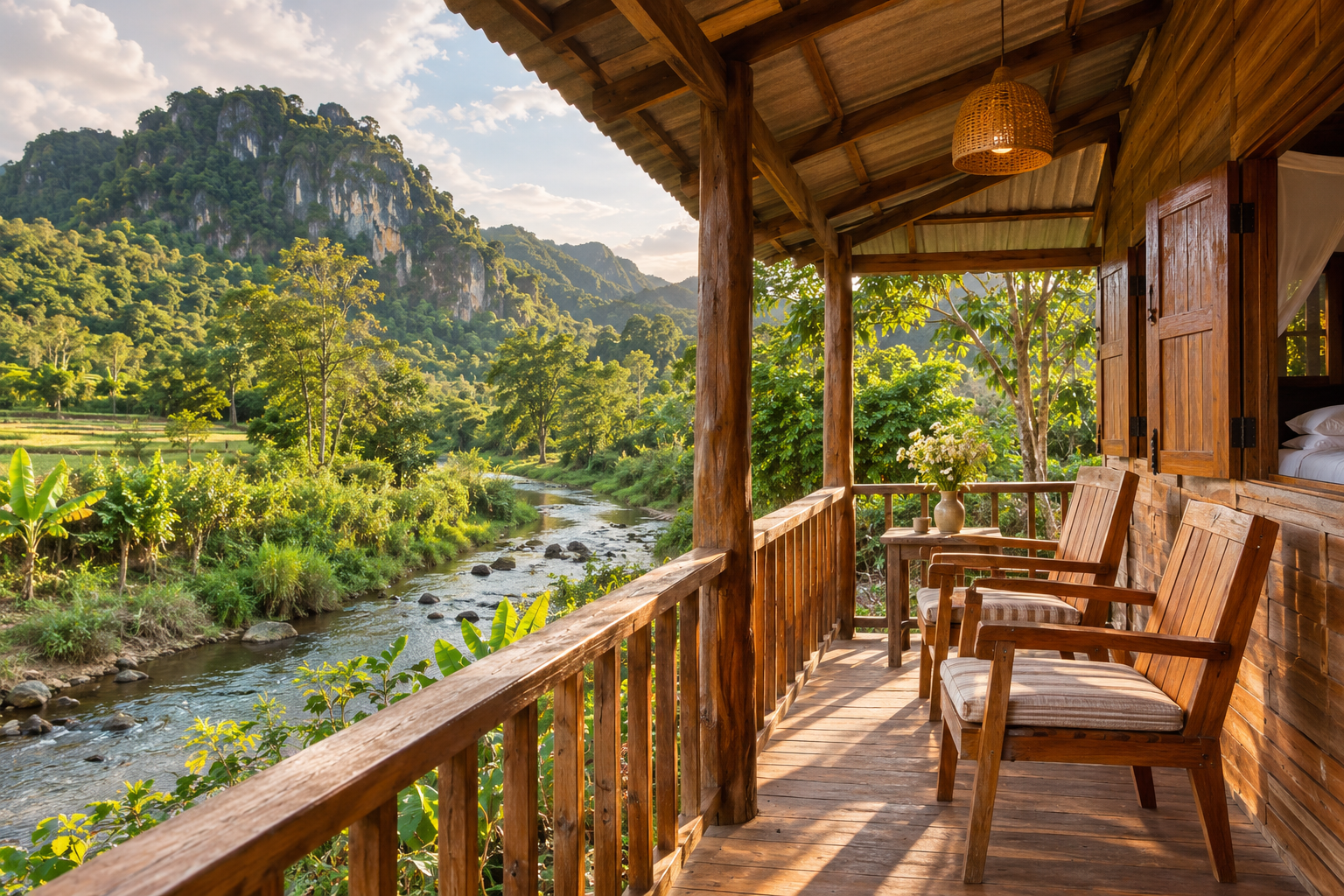
The transport trade-off is that an overnight may require a different quotation. Ask whether the same driver remains with you, what overnight arrangements are included, and when the next day's service starts. If you choose separate transfers instead, confirm both bookings and the luggage arrangements. Compare the complete plan, including the onward destination, rather than comparing a single-day vehicle rate with only the first leg of a two-day itinerary.
A cave stop on the way to Mae Hong Son
A one-way journey can avoid returning over a road you intended to continue along, but it creates a different constraint: hotel arrival at the far end. Send both hotel addresses and ask the chauffeur to assess the cave detour, waiting time, lunch and final drive together. The cave lies off the main highway; passing through Pang Mapha does not mean the visit adds only the time spent underground.
Keep suitcases as a separate planning item. Tell the operator the number and size of bags, plus any folding stroller or other bulky equipment, before a vehicle is assigned. Agree where luggage stays during the visit and carry what you need for the cave in a smaller bag. If continuing that afternoon, use an agreed departure window to decide whether an optional stop still fits. An airport connection introduces a harder deadline and needs its own assessment.
What a chauffeur can organise, and what needs a cave guide
The value of the van is continuity: one pickup, an agreed road route, a place for luggage and a known person to meet after the activity. Discuss rest stops and your comfort with winding roads in advance. Ask where the vehicle will wait, whether the driver remains available throughout, and how to communicate if the visit takes longer. Do not rely on sending an underground message to change a pickup plan.
The cave service needs separate confirmation. Official tourism guidance calls for a guide with a lamp; the complete visitor experience can involve a bamboo raft as well as walking. Establish who arranges that service and how the party will be divided. A group that fits comfortably in one van may need several cave groups, so simultaneous entry and identical finish times should not be assumed.
Consider a hypothetical party of six adults with two different walking preferences. Ask whether some can take a shorter available circuit while others continue, who accompanies each group and where everyone reunites. The chauffeur cannot be presumed to supervise guests inside or replace the cave guide. If a suitable shorter option is unavailable, decide before travel whether the whole party prefers another outing.
Water levels, access and the limits of online information
Older official tourism material describes year-round visiting, while a November 2026 Pai operator guide reports that high water can restrict rafting, individual chambers or sometimes the whole visit. These statements address different things: an attraction can operate across the year without offering every section each day. A seasonal description is therefore insufficient confirmation for a particular booking.
Ask for the currently available circuit when arranging the trip, then reconfirm close to departure. If the raft is the main reason you want to go, say so and agree what happens if it cannot operate. A reduced walking visit may be worthwhile for one party and disappointing for another. Settle whether the alternative is a shorter day, a different local stop or a change of date, including the effect on vehicle charges.
Online fees and opening times also disagree, so this guide does not reproduce them. Request a dated breakdown from the relevant providers: transport, waiting, cave guide, raft, admission if applicable and any additional charges. Ask what is payable locally and by which method. Confirmation from a transport company should specify which cave services it has actually arranged, rather than simply calling the journey a cave tour.
Make the enquiry ready for a useful quote
- Journey: travel date, exact pickup address, Pai return or onward destination, and preferred return or hotel-arrival window.
- Passengers and bags: adult and child numbers, luggage sizes, bulky items and any requested child seating to confirm before booking.
- Cave priorities: whether rafting is essential, whether you want the fullest available circuit, and whether anyone prefers a shorter option.
- Walking needs: comfort with steep stairs, uneven ground, dim light and getting onto a low raft; ask for a realistic description rather than an easy or difficult label.
- Timing: meal and rest breaks, optional viewpoints, dusk observation if wanted, and a clear reunion point.
- Inclusions: guide and raft arrangements, waiting allowance, overtime terms, overnight driver arrangements where relevant, and the response to restricted access.
Ask Mister Tour Thai to assess that brief before you commit to extra stops. For a Pai-based holiday, a dedicated cave day usually keeps the logistics straightforward. For a journey continuing west, compare an onward transfer with a nearby overnight. The better choice is the one that gives the cave enough time while matching your group's walking abilities, luggage and final destination.
Research checked on 19 November 2026. Images are AI-generated travel illustrations, not documentary photographs of current cave access, facilities, vehicles or tour operations.