
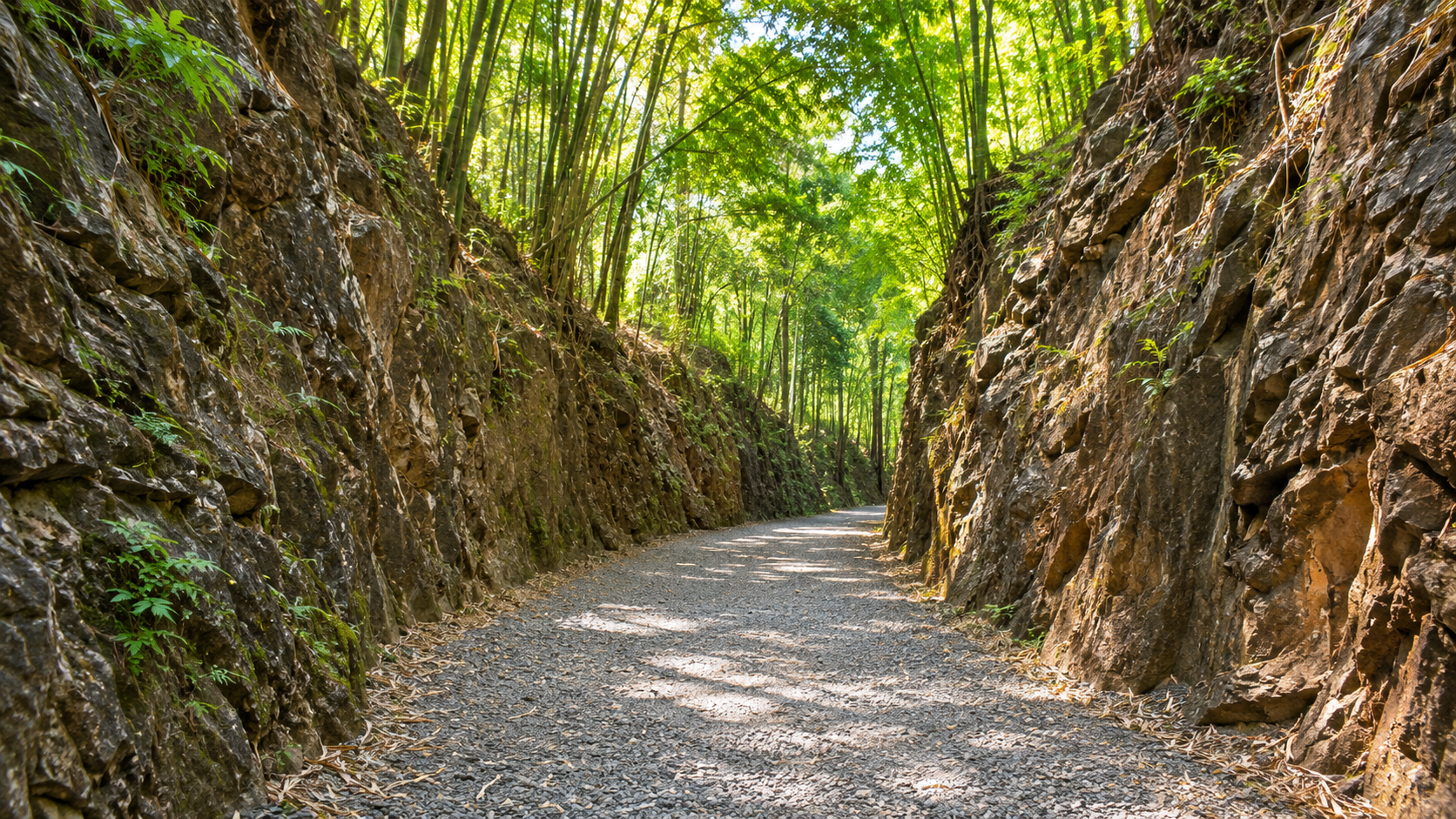
A private van to Hellfire Pass makes most sense when you know where you want the driver to meet you afterwards. A family visiting the exhibition can leave and return through the same entrance. Walkers continuing beyond the memorial have a different choice. They can retrace the railway alignment or arrange a collection on Hintok Road. That decision affects where the van waits, who can travel together and how much time to leave before dinner back in Kanchanaburi.
Start with the people whose stories you came to hear
The Hellfire Pass Interpretive Centre in Sai Yok commemorates the Allied prisoners of war and Asian labourers forced to build the Burma–Thailand Railway during the Second World War. Konyu Cutting gives physical scale to the work. The voices in the audio guide give the excavation a human history. Start inside so that when you reach the rock walls you have a sense of who worked here and under what conditions. Allow someone listening to a testimony to finish before gathering the group for the next stop.
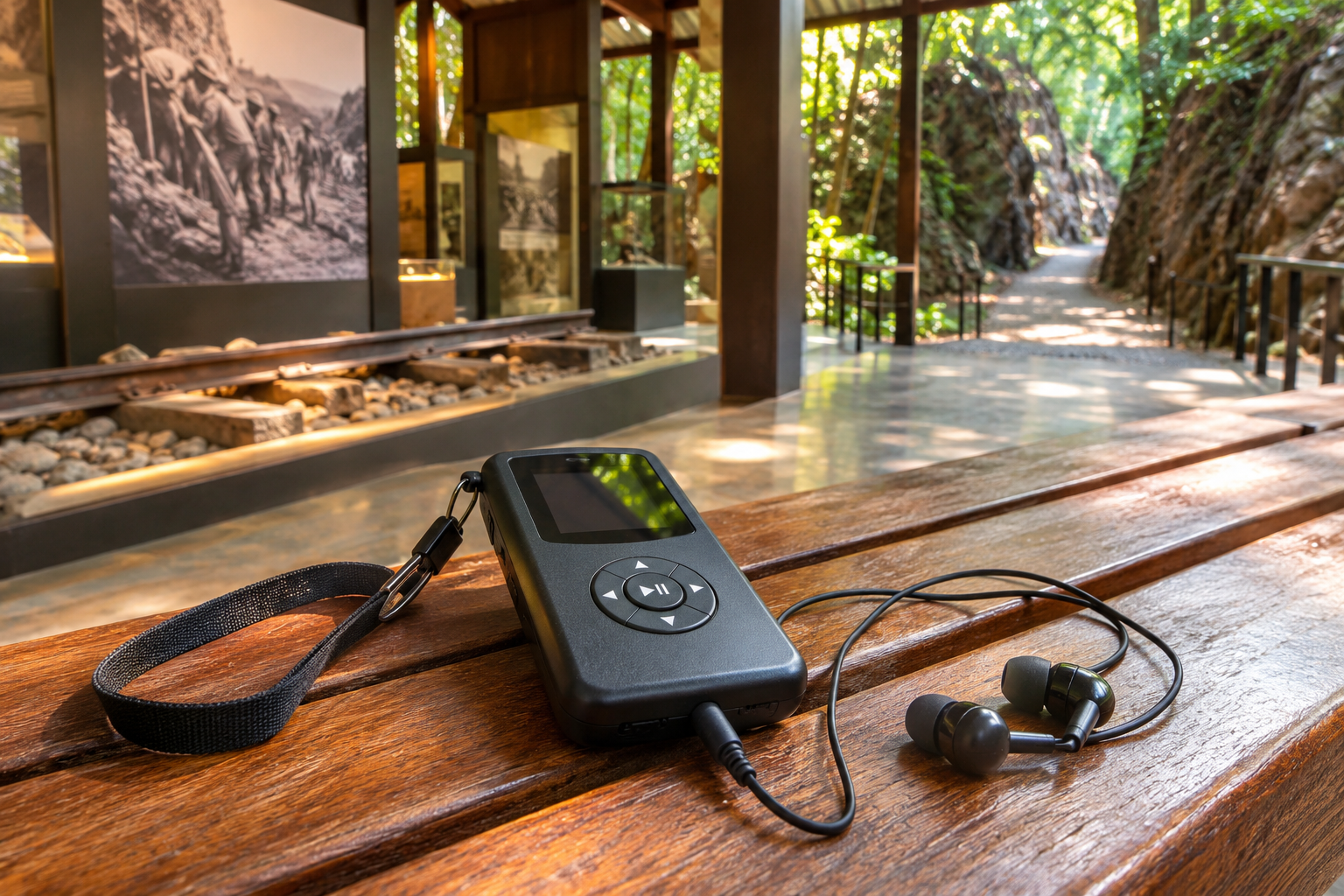
If you are travelling with a relative who has a family connection to the railway, let them set the pace. Ask before the visit whether there is a particular recording they would like to hear or whether they would prefer some time alone at the memorial. The centre’s visitor FAQ links to audio resources you can explore beforehand. Listening together at home can help you choose which parts of the site to prioritise, particularly if a long walk would be difficult.
An exhibition visit with a Kanchanaburi hotel return
Choose a return to the main entrance if the exhibition is your priority. Give the chauffeur the name and map pin of your actual hotel. Properties described as riverside in Kanchanaburi can have quite different starting points. Ask for a pickup time based on that address and tell the operator whether you want breakfast before leaving. There is little value in accepting an early collection simply to spend the first part of a remembrance visit looking for a meal.
For someone using a walking aid, ask centre staff about the route from passenger drop-off to the gallery, toilets and lower level. Describe the actual requirement, such as avoiding steps or needing a seat after a short distance. The indoor visit and the descent to the rail bed involve different movements. Someone comfortable standing at an exhibit may still find the return climb tiring. Agree on a place to sit and a reunion time before other members of the party head outside.
Walk to the memorial and return together
For first-time visitors who would like to experience the cutting on foot, the memorial makes a natural turning point. The official audio guide describes stairs, a path and the former rail bed on the way down. The return includes the climb back up. Plan around the person who will need the most time on that ascent. Leave space for a pause at the memorial itself. Scheduling the outbound walk to the minute can make the most meaningful part of the visit feel like a deadline.
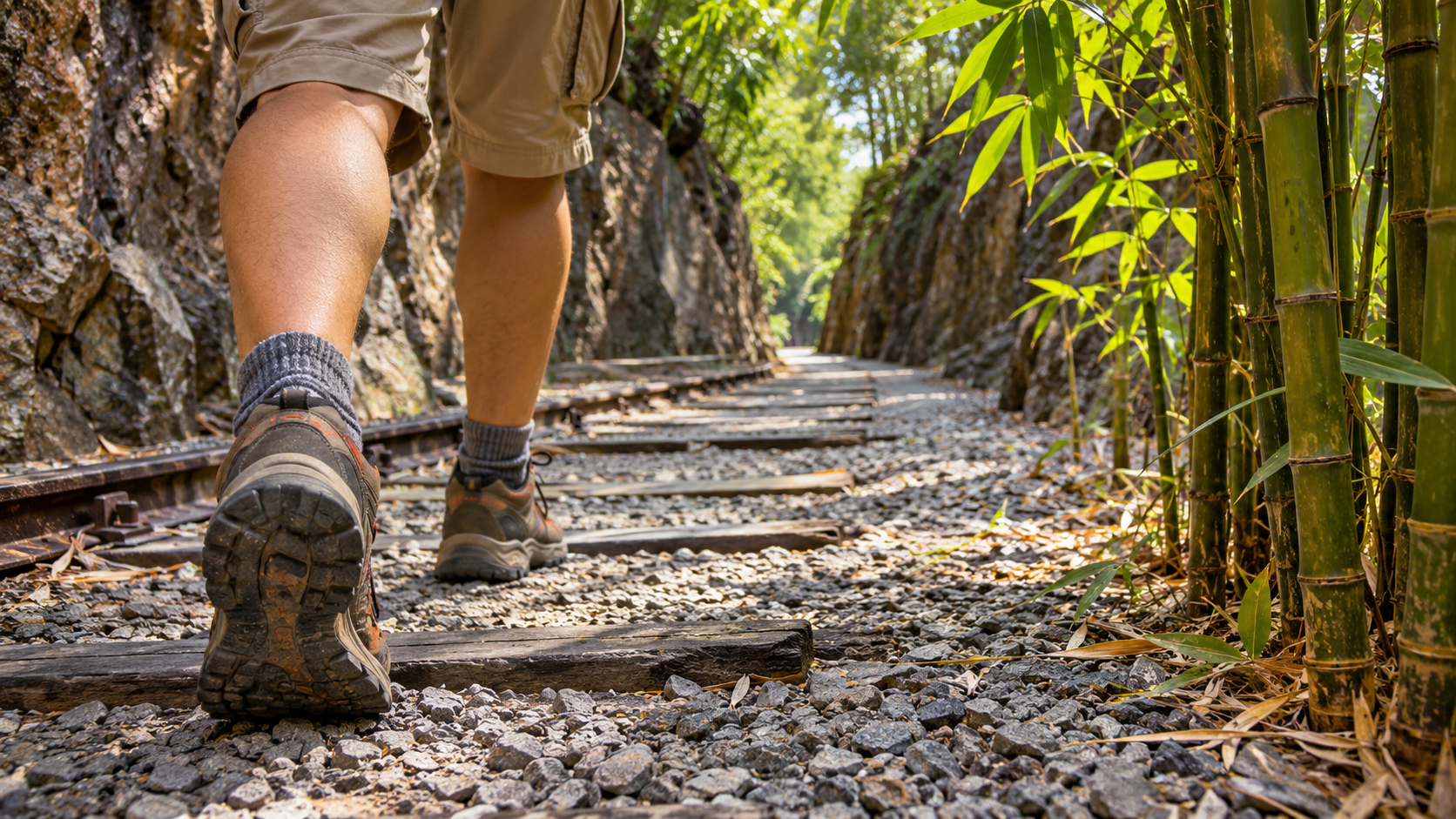
Arrange to meet the driver back at the centre and keep the collection details with both the walkers and anyone staying behind. A photograph of the agreed meeting place can be easier to recognise than a text description of an entrance. Carry water down with you and wear shoes that feel secure on loose material. If the footing or heat feels uncomfortable early in the walk, turning around still leaves the exhibition to explore. Tell the chauffeur where to wait if you finish earlier than planned.
Continue towards Hintok Road with a collection arranged
The longer trail continues roughly two kilometres beyond the memorial. According to the centre, walking out and back from the start totals about 5.2 kilometres. There is no centre shuttle at the far end. The visitor FAQ describes a private-driver pickup on Hintok Road by prior arrangement, via a winding local road. Confirm that your operator accepts that approach with the vehicle assigned to your booking. A quote that simply says “Hellfire Pass and return” leaves the most important part of this itinerary open.
At reception, check the day’s trail status and the collection point with staff before sending the van ahead. Long-trail visitors must carry the centre’s safety radio. Ask staff how to return the radio and any borrowed audio equipment, particularly if an identity document has been left as a deposit. Include a drive back to the centre in the vehicle schedule when necessary. A one-way walk can still involve two visits to reception. Keep that distinction clear if another passenger expects to head straight to lunch.
When some passengers walk and others stay
A single vehicle can collect walkers at Hintok Road or wait at the centre with a passenger who needs it. It cannot serve both places at the same time. Discuss that interval with the whole group before paying for a longer booking. One workable arrangement is for everyone to visit the exhibition together, then for the shorter-distance visitors to stay at the centre until the driver returns with the walkers. Check that the waiting arrangement suits them and fits the centre’s visiting hours.

Set an explicit fallback if the long trail closes or the collection road is unsuitable. Everyone might instead return from the memorial together, with lunch brought forward. Agree on who will notify the driver before the group separates. Phone reception along the trail can be limited. A plan that depends on sending a location pin at the last minute gives the chauffeur little to work with. Write down the agreed timing and follow staff guidance if conditions change while you are walking.
Ask for two comparable van quotes
Give Mister Tour Thai your travel date, pickup pin, number of adults and children, luggage count and final destination. A day trip from a hotel differs from a transfer to a new property with suitcases on board. Specify any child seat or storage requirement and whether a passenger needs help getting into the vehicle. Request one price for a centre return and a second for the Hintok Road collection with equipment return. Ask which waiting hours, road expenses and overtime terms each price includes.
For example, a couple checking out that morning might write, “Two adults with two suitcases, collecting from our Kanchanaburi hotel after breakfast. We would like the exhibition and long trail if open. Please include a confirmed Hintok Road meeting point, a return to hand back the radio, and drop-off at our next hotel. Please also price a memorial-only visit if the long trail closes.” Add the two hotel pins and any latest acceptable arrival time so the operator can assess the whole day.
If another stop is important, decide which commitment can move. A fixed dinner reservation makes a shorter trail easier to accommodate. An unhurried visit to the cutting might instead justify leaving the evening meal open. Check the centre’s trip-planning information close to departure and ask about last trail entry for your date. Confirm the final meeting point again with your chauffeur at drop-off. That short conversation gives you the freedom to put the phone away and listen once you reach the railway.