
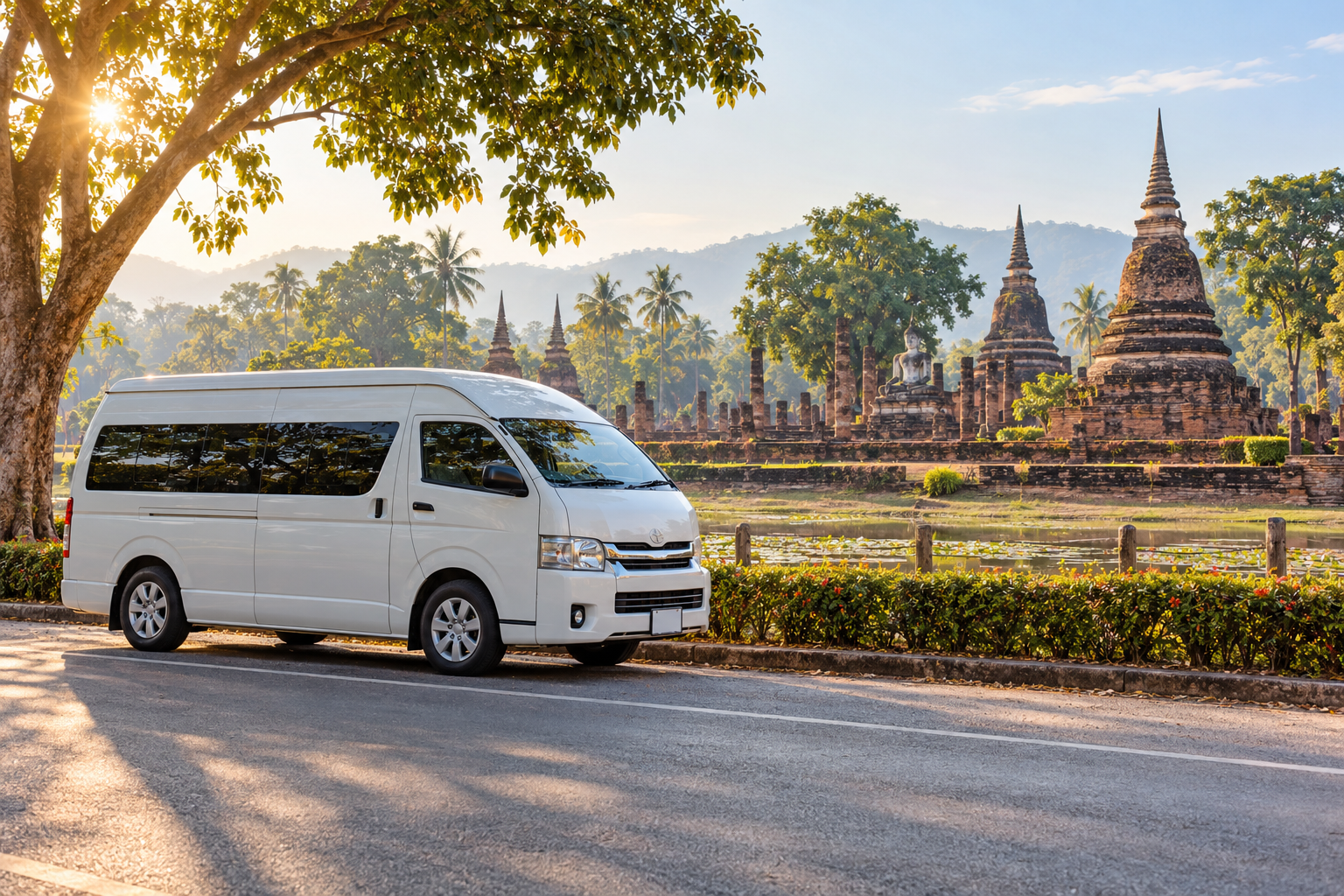
Quick answer: give each historical park its own visiting day
A chauffeur-driven private van works best for Sukhothai and Si Satchanalai when it connects a sensible hotel base with two deliberately paced heritage visits. If you have one full sightseeing day, focus on Sukhothai. If you have two, consider adding Si Satchanalai on the second. Trying to tick off both after a long arrival transfer leaves little room for looking, resting, or understanding what you came to see.
This guide is for travelers deciding how many nights to reserve and what to request from Mister Tour Thai. It separates the journey to the region from time inside the historical parks. The suggested sequences are planning recommendations, subject to your dates, accommodation, access arrangements, and the operator's confirmed schedule. They are not a fixed package or a guarantee that every proposed stop will fit.
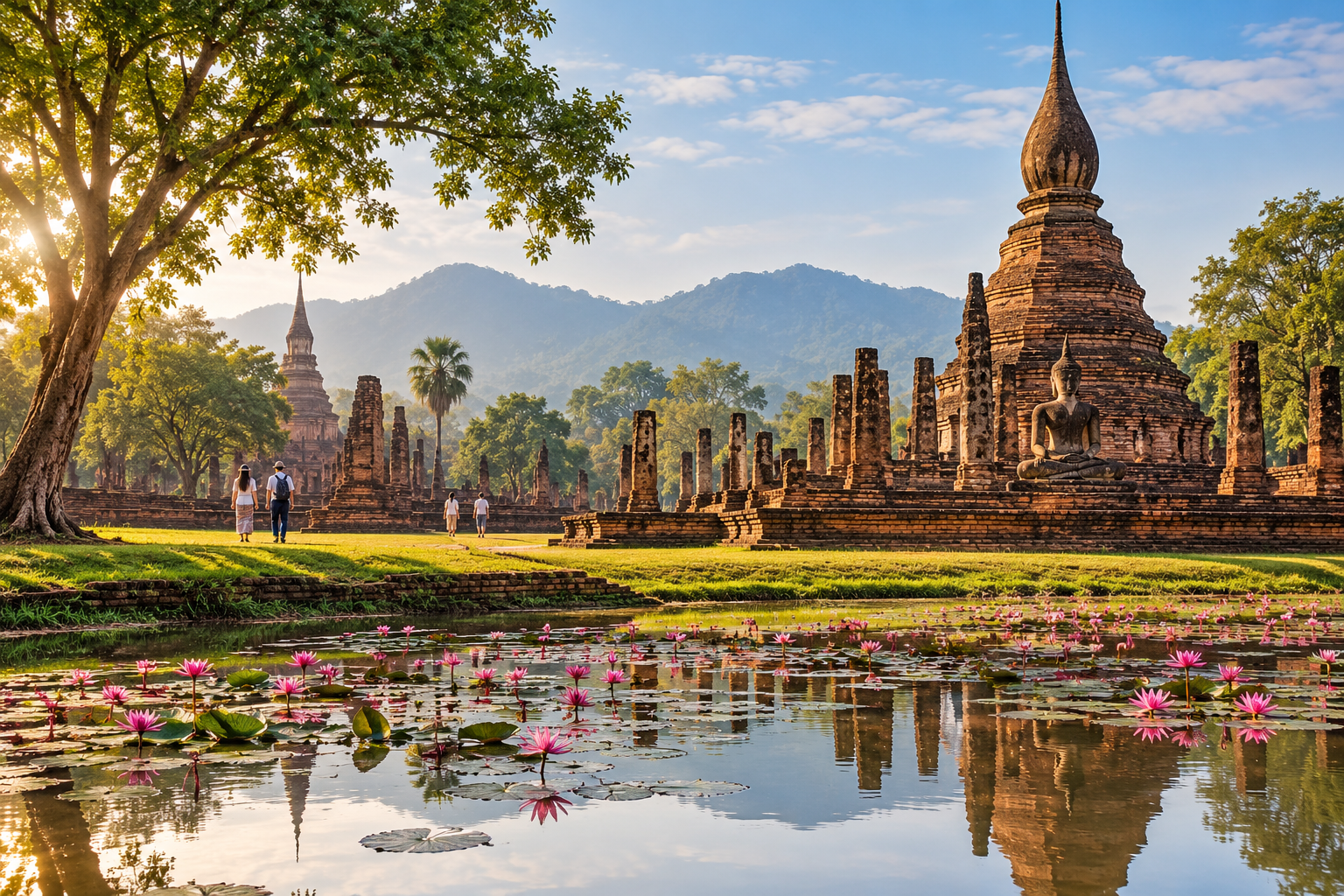
Why these are two visits rather than one extended stop
UNESCO lists Sukhothai, Si Satchanalai, and Kamphaeng Phet together as one World Heritage property, while describing their management as three separate historical parks. It identifies Si Satchanalai with temples, monasteries, and an important ceramics industry. That shared heritage makes a two-park journey meaningful, but does not make the sites one walkable compound. See the UNESCO property description for the historical context.
For itinerary design, the useful question is whether your group wants a second archaeological landscape or would prefer more depth at the first. Architecture enthusiasts may value both. Travelers who mainly want an introduction to Thai heritage may be happier with one park, a good guide, and an unhurried meal. Do not add Kamphaeng Phet simply because it appears in the same inscription; it needs its own routing decision.
One full day: stay focused on Sukhothai
Start from a locally agreed hotel and make Sukhothai Historical Park the main purpose of the day. Ask your guide or planner to propose a selective visiting circuit based on your interests, rather than requesting every monument. Establish a meeting point, a lunch break, and a return window before leaving the vehicle. Keep an optional afternoon chapter conditional on the group's energy and the confirmed opening arrangements.
This is also the better version for a mixed group in which some people love ruins and others prefer a shorter introduction. Agree on a minimum shared visit, then allow a proper break. A chauffeur service can simplify transfers and collection, but it does not remove walking inside heritage grounds. If your only available day includes a substantial intercity arrival or departure, ask whether even this compact version is realistic.
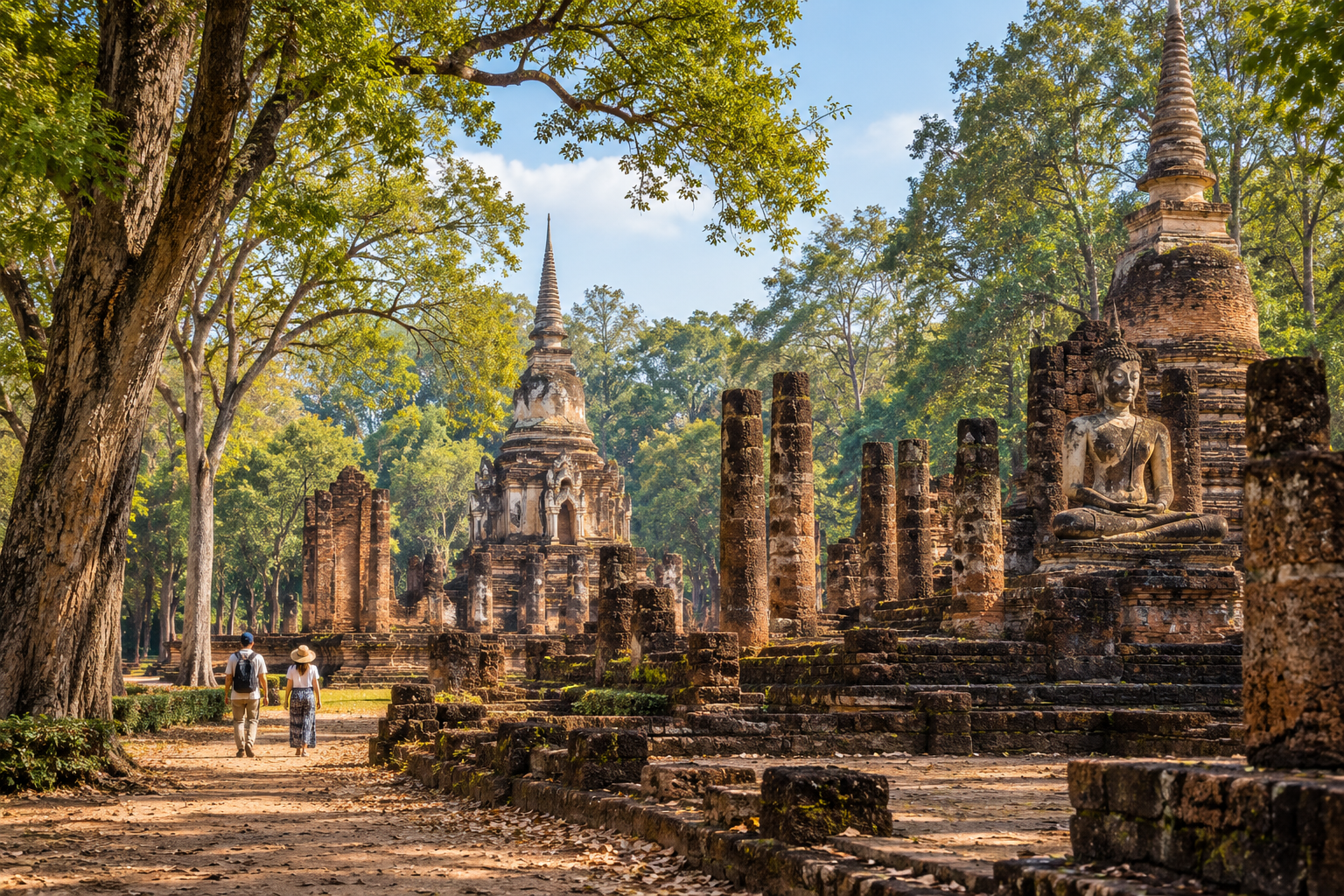
Two full days: separate Sukhothai and Si Satchanalai
Use the first full day for Sukhothai and the second for Si Satchanalai, with the exact order adjusted to the hotel and onward route. The benefit is not a longer list of sights. It is the ability to finish one visit without constantly watching the clock for another park. Ask for a hotel-return proposal and a proposal ending at your next agreed destination, then compare the driving and waiting involved.
Two full visiting days may require three nights if arrival and departure consume much of their respective days. Count usable sightseeing windows rather than hotel nights alone. An evening arrival followed by an early departure two mornings later provides only one complete day. Before confirming accommodation, send the operator your actual transport details and ask which portion of each day remains available for visiting.
Hotel location changes the practical plan
Share the hotel's exact address, not simply the word Sukhothai. Ask the planner to explain how the location affects pickup, the first park entrance, meals, and the next morning's departure. A hotel chosen primarily for its room style may produce a different route from one chosen for access to your principal visit. Compare the whole stay rather than judging transport by a single headline price.
Keeping one base can avoid packing between the two park days. Changing hotels may make sense when continuing onward, but adds checkout, bags, and a new arrival deadline. Ask whether luggage stays with the vehicle during sightseeing and what arrangements apply during driver breaks. Keep passports, medication, money, and other essentials with you; do not treat a parked vehicle as guaranteed secure storage.

Add living culture only if it serves your interests
The Tourism Authority of Thailand's Sukhothai cultural article describes Sathorn Gold Textile Museum in Hat Siao and Ganesha Gallery in Mueang Kao. These offer research leads for travelers interested in textiles or ceramics. The article dates from 2020, so its opening details and activity descriptions should not be treated as current booking confirmation.
If one of these interests matters to your group, ask for availability to be checked for your date and for the detour to be shown in the itinerary. A workshop requires a separate arrangement, not just a vehicle stop. Choose one additional experience instead of making both compulsory. If confirmation is unavailable, keep the archaeological visit as the main plan rather than selling the trip around an uncertain activity.
What the van handles, and what it does not
A private van can connect the hotel, agreed entrance areas, lunch stops, and the next destination without requiring the group to arrange each road leg separately. It is particularly useful when passengers carry luggage or need a coordinated pickup after visiting. For a traveler staying close to one park and making only one short outing, simpler local transport may meet the need; compare the actual service required.
Do not assume that a van can drive beside every monument. Ask which entrance and collection points are permitted, what local circulation options currently operate, and whether those costs are separate. Likewise, a chauffeur is not automatically a licensed historical guide. Request guiding and a preferred language explicitly if interpretation is central to the trip. The written quote should distinguish vehicle service, guiding, admissions, and any local transport.
Protect comfort without overpromising accessibility
Describe the group's practical needs before the route is priced: how long guests comfortably walk, whether uneven surfaces are difficult, and whether anyone needs frequent seated breaks. Request confirmation of access for each selected visit. A large vehicle or an air-conditioned cabin does not establish step-free access within a historic site. Send dimensions for mobility equipment and ask about boarding as well as storage.
Build the day around water, meals, suitable footwear, and pauses out of the heat where available. Check weather and local conditions close to departure. If rain or fatigue reduces the usable visiting time, shorten the circuit before adding another transfer. Families should give children's ages and request any needed child seats in advance, with availability confirmed. A smaller number of worthwhile stops usually makes these constraints easier to handle.
Fit the region into a longer journey
Treat travel from Bangkok or Chiang Mai as a separate itinerary chapter, with realistic breaks and a clearly agreed arrival objective. Ask for road time estimates based on your exact addresses and travel date rather than relying on a generic province-to-province figure. Avoid attaching an important flight or another fixed commitment immediately after a full sightseeing programme without discussing the required margin with the operator.
If your main requirement is a heritage outing while keeping a Bangkok hotel, compare the Ayutthaya private-van guide before committing to a longer regional stay. If you are building a northern cultural journey, the Lamphun and Lampang planning guide provides a different route to consider. These are alternatives to weigh, not additional places to stack into the same two days.
Send a brief that produces a usable quotation
Ask Mister Tour Thai to compare a Sukhothai-only day with a two-day Sukhothai and Si Satchanalai arrangement. Specify whether transfers into and out of the region belong in the same quotation. Request the vehicle configuration, included service hours, additional-time terms, cancellation conditions, and arrangements if the itinerary changes. Confirm fuel, parking, tolls where relevant, driver waiting, and any driver accommodation separately; do not assume inclusion.
A useful enquiry reads: “We are four adults planning two full heritage days, with four medium suitcases. Please price pickup from our specified hotel, Sukhothai on one day and Si Satchanalai on the other, with a hotel return. We prefer short walking sections and would like an English-speaking licensed guide. Please show admissions, local park transport, and any textile visit separately.” Replace the example with your real dates, addresses, luggage, walking needs, and onward deadline.
The final decision is straightforward: reserve one full day when Sukhothai is the priority, and a second when Si Satchanalai adds something your group actually wants. Confirm the hotel and transfer pattern around those visits. Once the route, vehicle, guiding, and inclusion list are clear, the quote becomes a practical basis for booking rather than an attractive price attached to an undefined day.