
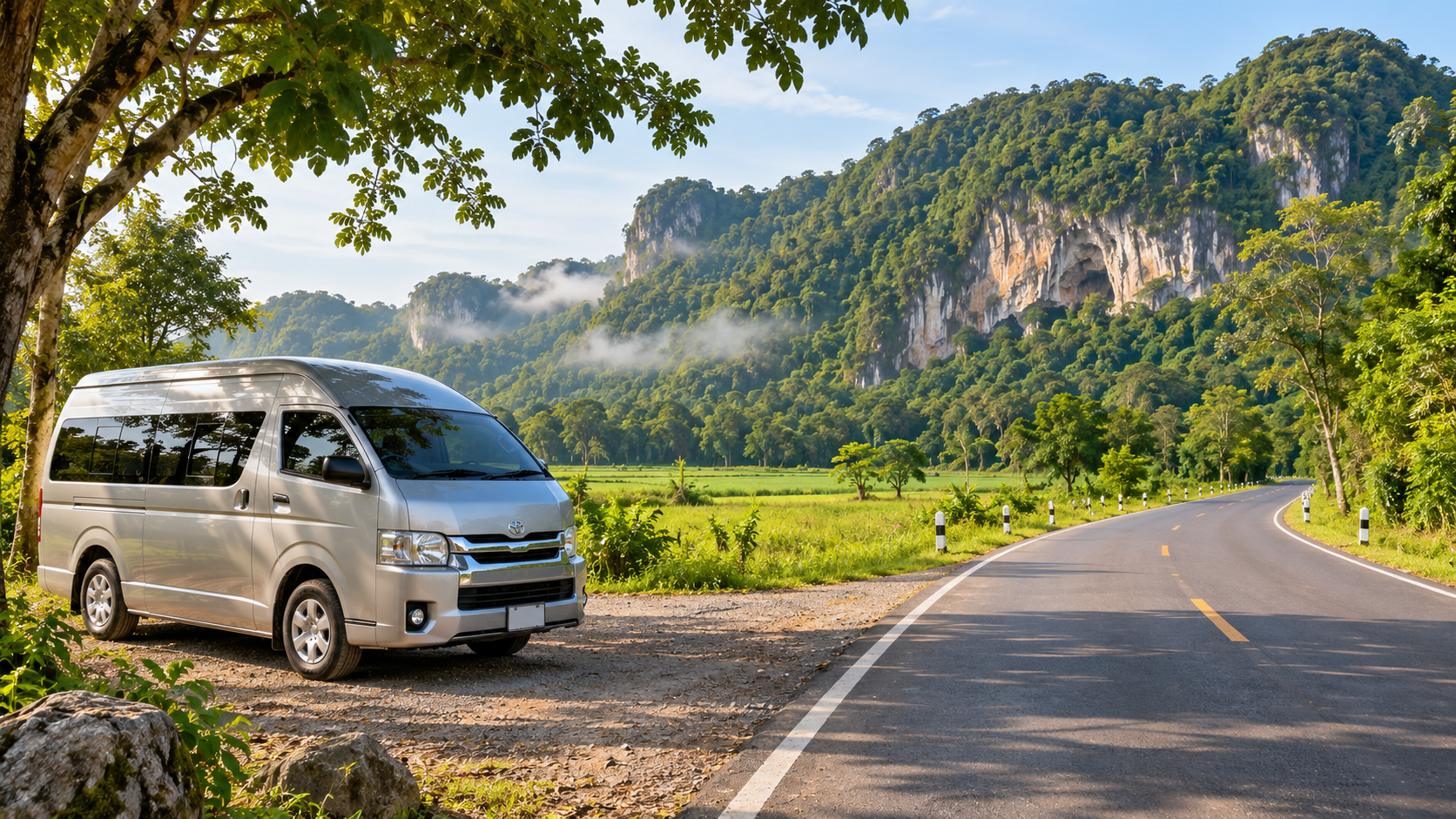
For a private van trip to Tham Le Stegodon in Satun, book the cave outing first and set the hotel pickup second. Water from inland streams and the sea affects the passage through this southern Thai mountain. The time that suits your driver may be the wrong time for a kayak. If the cave is your reason for travelling, give it a mainland day with a flexible finish. If you have a boat or flight to catch, consider a confirmed museum visit in Thung Wa and keep the water trip for another date.
What you come to Thung Wa to see
One of the best reasons to go underground here fits in a display case. A fossil jaw, with two lower molars still present, helped give the cave its name. Stegodon was an extinct relative of elephants. The Satun provincial guide places the elephant and rhinoceros remains found here in the Pleistocene. A visit to the Thung Wa Ancient Elephant Museum gives you a chance to understand what researchers can learn from a tooth before you try to make sense of an entire limestone mountain from water level.
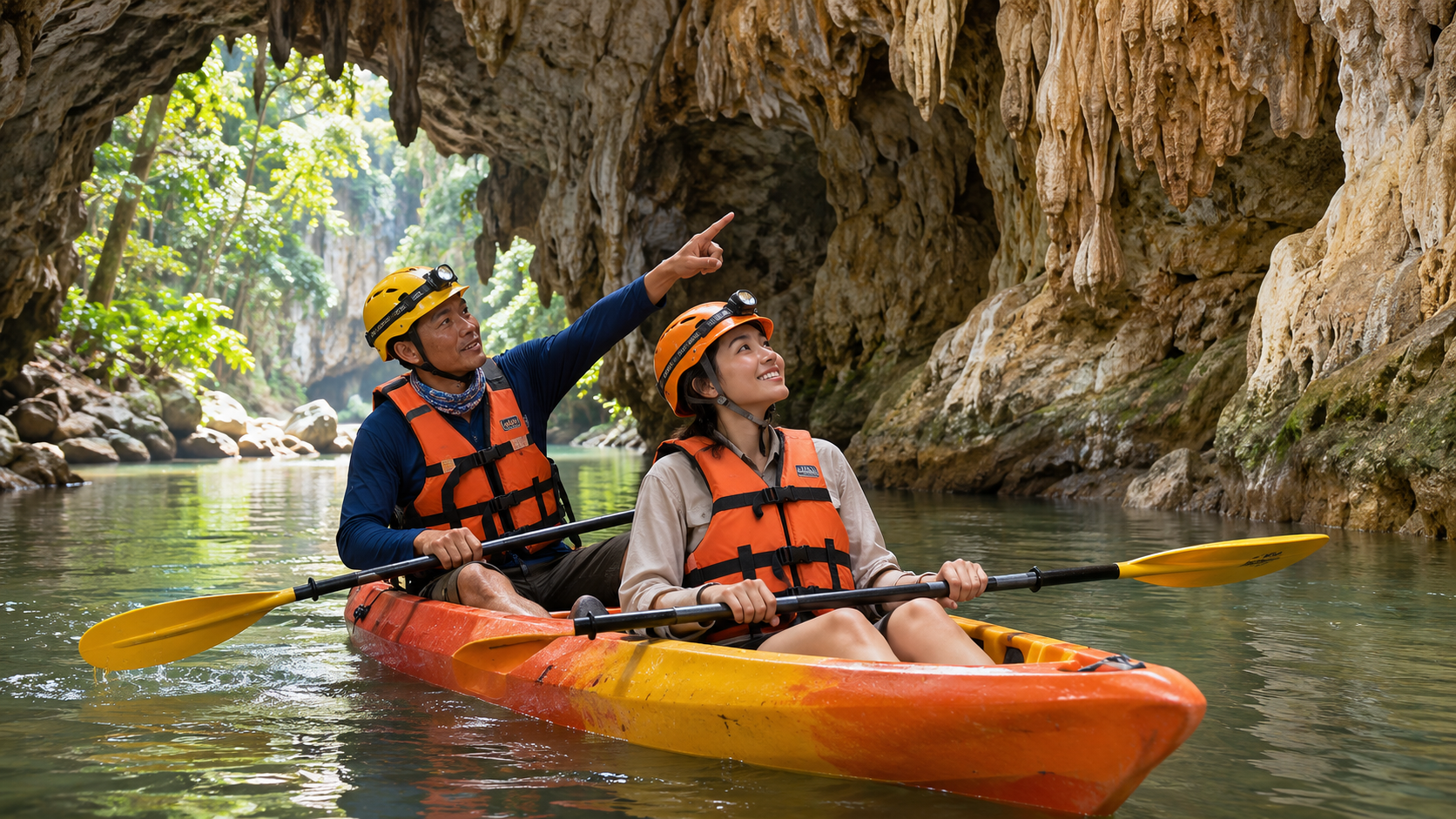
The distinction matters if you are choosing a stop for someone interested in fossils. UNESCO describes marine rocks and fossils in the wider Satun Global Geopark going back more than 500 million years. That age belongs to the regional geological record. The cave mammals came much later. Ask the local guide to explain the jaw and its discovery, and use the museum for a closer look at the evidence. A kayak trip is a way to see the water passage. Seeing a particular original specimen on display or spotting a fossil from your seat would require separate confirmation.
Give the chauffeur three meeting points
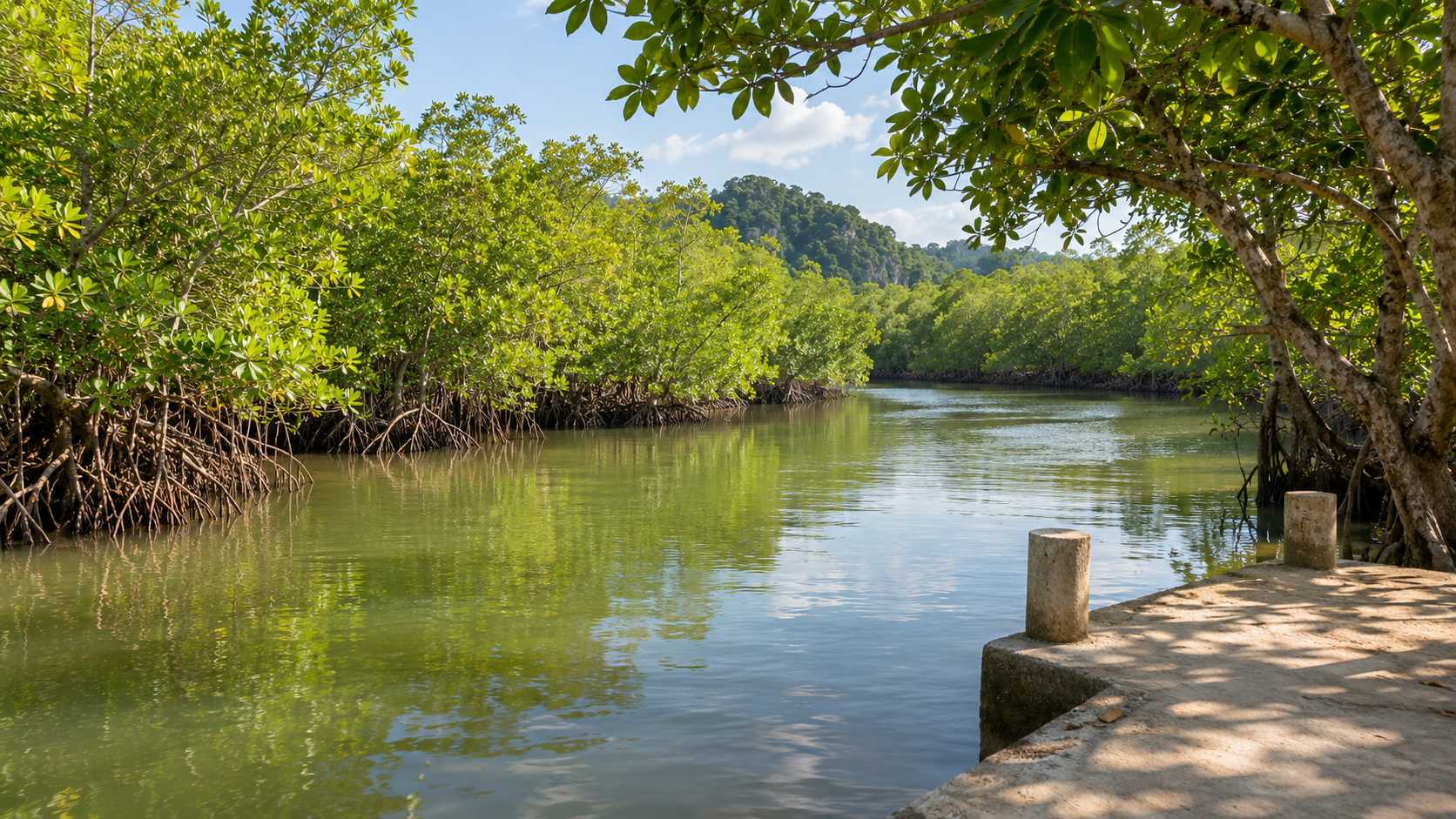
A map search for the cave answers only part of the transport question. The visitor contact is in Thung Wa, the entrance is in the Ban Khiri Wong area, and published descriptions trace the route out through mangroves toward the Tha Oi landing. The provincial guide calls the passage about four kilometres long. That measures the cave itself. It tells you little about the time between leaving your van for the briefing and finding it again with dry clothes and lunch still ahead.
Ask the community team for the check-in pin, who takes guests from check-in to the launch, and where the programme hands them back to the driver. Some English descriptions spell the landing “Tha Oil”. Forward a pin supplied for your actual tour and the name of the person coordinating collection. If the booking includes transport back to the starting point, the chauffeur should wait there. If it ends at the waterfront, the vehicle can reposition while you are on the water. Agree who will tell the driver if that arrangement changes. A phone inside a dry bag underground is a poor way to coordinate the move.
A cave-first day from Trang or Hat Yai
Start with two pieces of information from your hotel booking: the exact pickup address and where you want to sleep that night. A return trip from Trang, a return from Hat Yai and a one-way journey between them have different vehicle requirements. With a one-way hire, the bags travel while you paddle. With a return to the same hotel, leave large cases there if storage is available. Give the planner the confirmed local reporting time so the road estimate includes a comfort stop and enough time to find the correct desk.
On a day with an early reporting time, ask the hotel about breakfast before committing to a departure. Plan the main meal after collection and carry what the local team recommends for the activity. For a later round, a confirmed museum opening creates a natural first stop. Leave enough time to finish the exhibition without rushing the briefing. If your preferred hotel makes either start uncomfortable, compare the cost of a mainland overnight near Thung Wa with that of a long return drive. An overnight buys flexibility in where you start the next morning. It cannot secure a place on the water.
When the museum makes a better stop
Imagine four people leaving Trang together. Two want to paddle and two like the story of the extinct elephants but dislike enclosed spaces. With one van, sending the chauffeur straight to the exit could leave half the party waiting at the museum beyond its opening hours. Get a collection time and a comfortable waiting place for the land group before splitting up. A simpler choice is a museum visit together, lunch, then a single transfer to the next hotel. Ask which exhibitions will be open that day, whether interpretation is available in your language and how far it is from the drop-off to a seat inside.
A ticketed departure changes that calculation again. Work back from the time you must present yourself with bags at the correct terminal or pier. Ask the road planner what time the group would need to leave Thung Wa, then compare that with the local team's estimated handover. If those times leave little margin, take out the cave. Keep even the museum optional until its opening is confirmed. For a different kind of transfer day, see our Trang town and Pak Meng pier guide. Travellers staying east of Satun can compare a land-based outing in our Hat Yai and Songkhla Old Town guide.
What to settle with the local cave team
Request the reporting and estimated finish times for your date, what happens if the water level changes, and how much notice the team can give before you leave the hotel. An older provincial publication describes year-round kayaking while also explaining the influence of tides and streams. Treat that as a description of the setting. Only the people running the outing can assess conditions for your trip. If the water leg falls through, agree whether you would still want the van for the museum and onward drive, or prefer to move the entire booking.
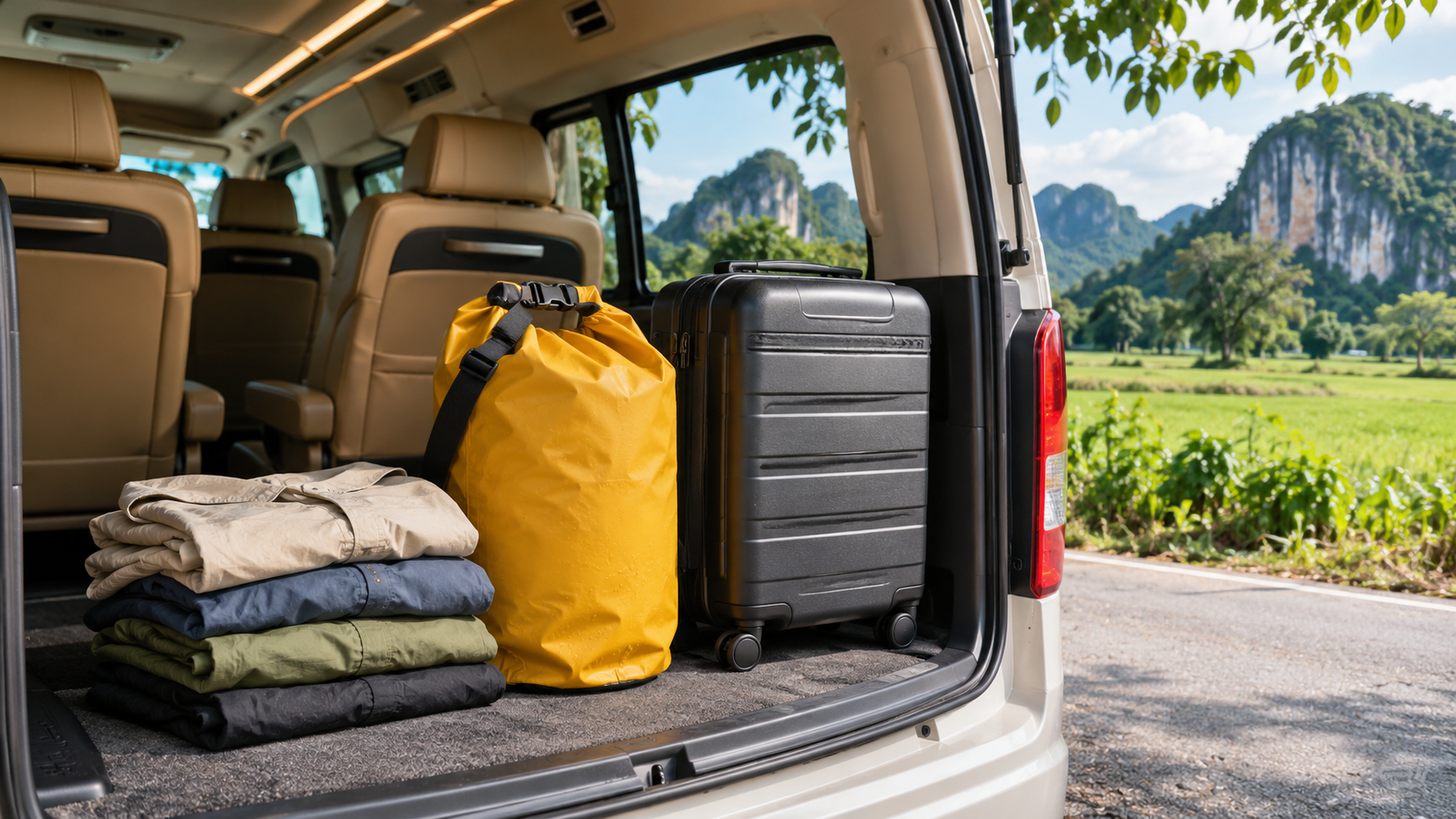
Describe what each passenger needs to do to join. Can they transfer into a low boat? Are they comfortable sitting in the dark until the group emerges? Give children's ages and ask about suitable equipment, participation limits and the guide's language. For anyone using a mobility aid, ask separately about the boarding surface and the landing. Easy access at one end says little about the other. Pack the dry change of clothes where the driver can reach it at pickup. Keep valuables with you according to the operator's advice and ask what can go aboard in a waterproof bag.
A quote request you can actually compare
For example, a family could write: “Four guests, including one child aged nine, leaving our Trang hotel with two large cases and a folding stroller. We want to finish at our Hat Yai hotel. Three would like to kayak and one would like to stay on land. We can change the date by one day. Please price the road journey with both collections, and tell us who can confirm the cave places and equipment before we pay.” Add the date, hotel names, contact number and any fixed arrival deadline. The split group and luggage inventory are more useful for selecting a vehicle than a request for a large van alone.
Ask Mister Tour Thai to identify the road service, waiting allowance, any parking charges, and the terms if the local team changes the finish time. Ask separately who books and collects payment for the cave guide, boats and any admission. Get the revised price for a museum-only transfer as well. You can then compare two trips that deliver your party and luggage to the same destination, see what the water experience adds, and choose while there is still time to reserve it.
Destination references: UNESCO's Satun profile, the Satun provincial guide, cave and museum entries, and the independent Tham Le Stegodon visitor guide.