
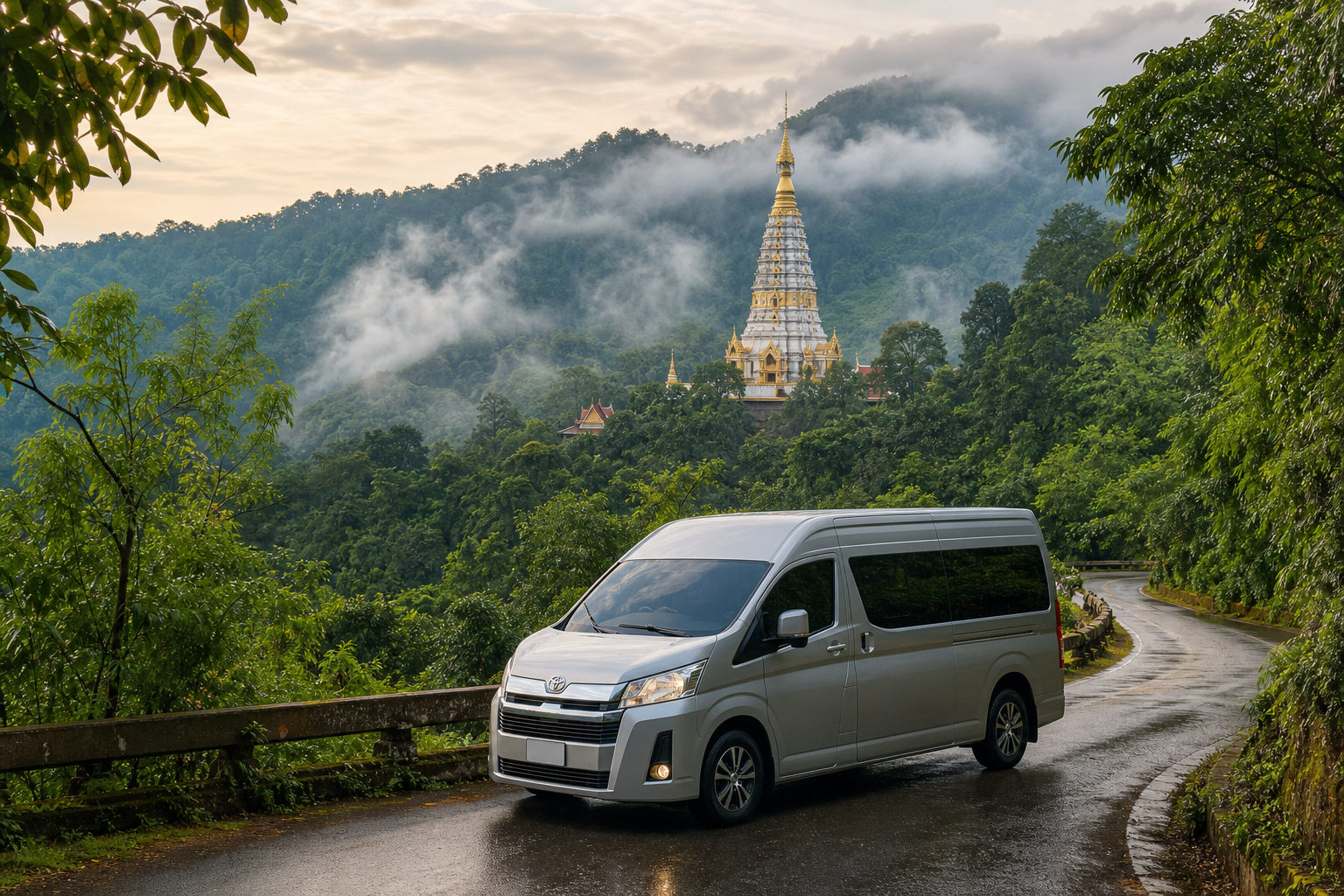
Quick answer for a calm Chiang Mai rainy-season day
A rainy-season Chiang Mai private van day works best when the route is built around one mountain highlight, one temple cluster, and enough flexible time for weather pauses. The strongest plan usually starts with hotel pickup, goes toward Doi Suthep or another elevated viewpoint while the morning is still manageable, then returns toward the old city or a softer cafe and market stop if rain becomes heavier. That structure keeps the day scenic without making travelers chase too many stops across town.
The value of a private van is not only the transfer. It is the ability to adjust the rhythm of the day. Chiang Mai can move from clear light to low cloud quickly, especially around hills and forested roads. A private vehicle gives the group a dry base, a simple meeting point, and the freedom to shorten a walk, wait out a shower, or change the order of temples without restarting the whole plan.
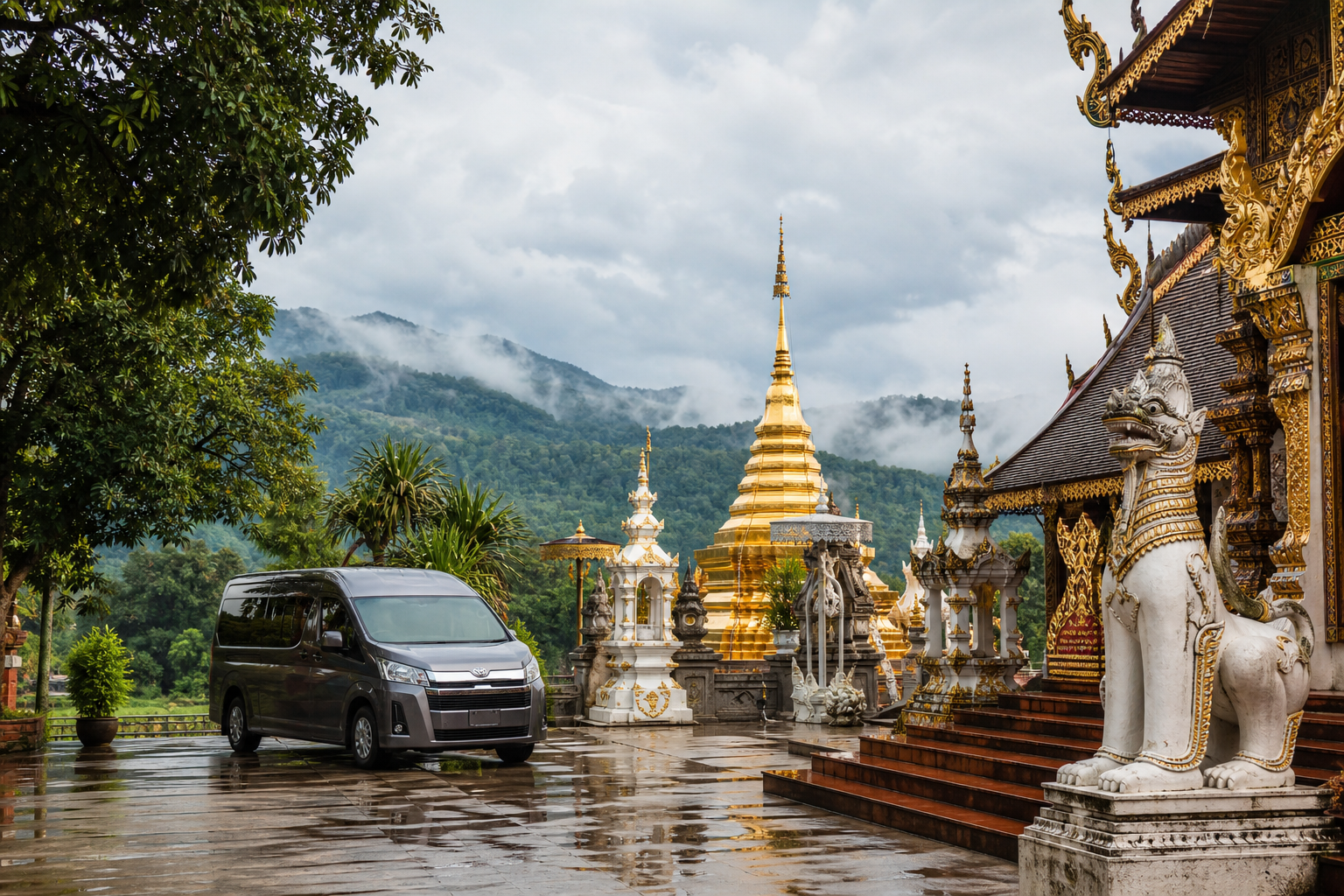
Why rainy-season Chiang Mai needs route discipline
Chiang Mai is compact in the old city, but its best day routes often spread outward. Temples, mountain roads, craft villages, cafes, viewpoints, and nature stops can sit in very different directions. In dry weather, a long list may still feel possible. In rainy season, the same list can become tiring because every stop adds parking decisions, umbrellas, wet shoes, and extra time getting in and out of the vehicle.
A better approach is to choose the identity of the day first. If the group wants temples, keep the mountain as the headline and use the old city as the easy second act. If the group wants nature, protect more time for the hill route and reduce the number of urban stops. If the group includes children or older travelers, use the van for shorter walks and more frequent resets. The result feels more premium because the day has space to breathe.
A practical route rhythm from the hotel
Start with a clear hotel pickup and confirm the walking comfort of the group before leaving. This matters in Chiang Mai because stairs, wet paving, and hillside paths can change how enjoyable a stop feels. The private van should carry umbrellas, small towels, and enough space for bags, camera gear, or a change of shirt. Small practical details make wet-season travel feel planned rather than improvised.
For many visitors, Doi Suthep is the natural first decision. Going earlier gives the group a better chance of softer light, cooler air, and a more relaxed drive. If clouds are low or rain is heavy, the visit can still work as a cultural stop, but the plan should not depend on perfect visibility. Keep language and expectations realistic: the mountain is valuable for atmosphere, temple context, and the drive itself, not only for a guaranteed view.
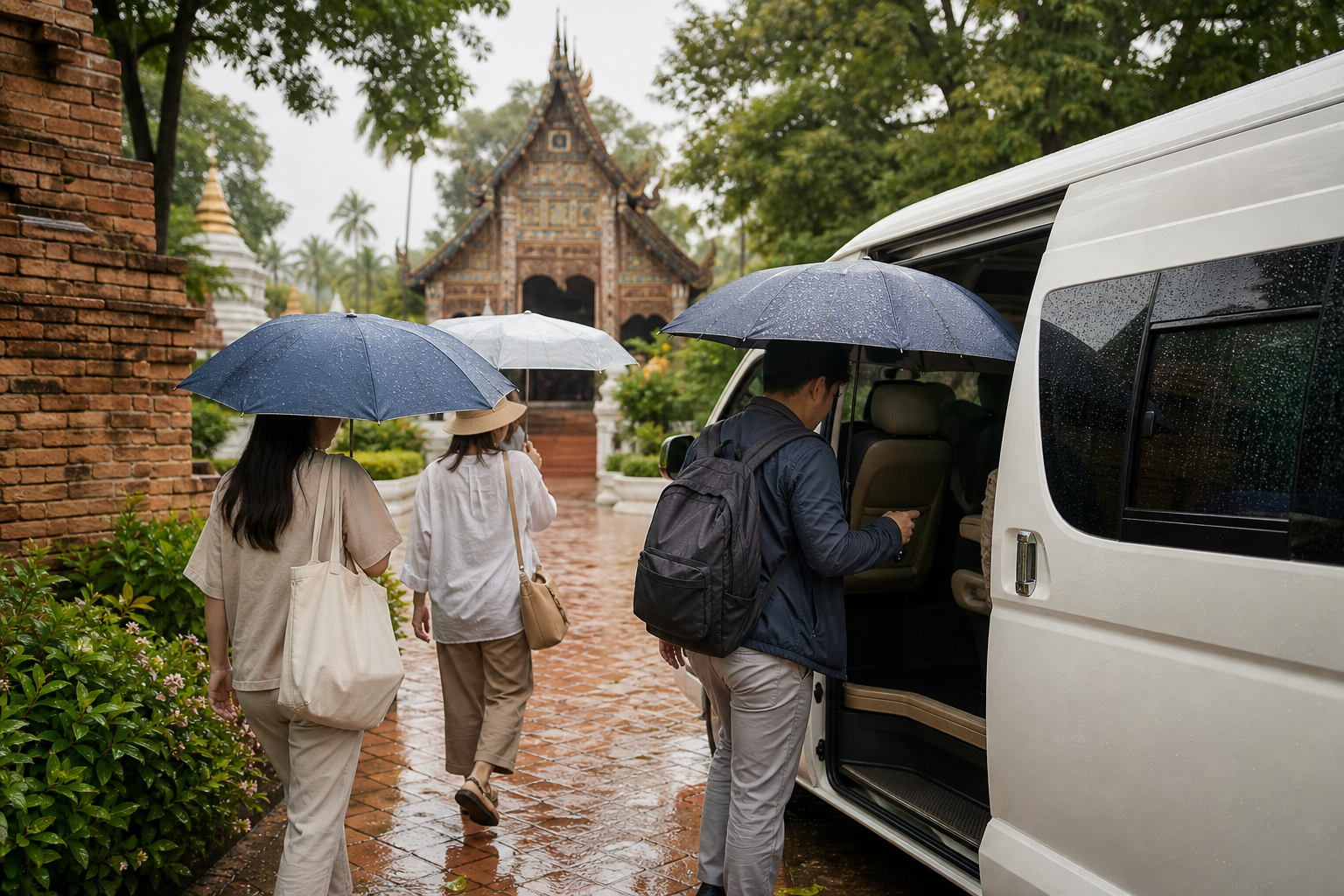
After the mountain, return toward the old city or a nearby lunch area. This second block should be lighter. One or two temples, a calm cafe, or a short artisan stop can create variety without overloading the day. The van then becomes the link between moods: mountain air, old city culture, food, and a dry return to the hotel.
Best stops to combine without rushing
A balanced route can pair a mountain temple with one old city temple, lunch, and an optional market or cafe stop. The exact names matter less than the relationship between the stops. Put the longer drive early. Put the shorter walking stops later. Keep the optional stop genuinely optional. This avoids the common mistake of turning Chiang Mai into a checklist when the city is better enjoyed with pauses.
Travelers often underestimate how much time they spend entering temples, removing shoes, taking photos, finding the driver, and moving through traffic near the moat. A private van smooths those transitions, but it cannot remove them entirely. That is why two strong cultural stops can feel better than five brief stops. The article should help readers understand that comfort and focus are part of the route plan, not a compromise.
How rain changes the mountain decision
Rain does not automatically make a Chiang Mai route poor. It changes the way the day should be paced. Forest roads look greener, temple courtyards can feel quieter, and the air may be cooler after a shower. The risk is not rain itself; the risk is promising too much. Avoid exact claims about visibility, trail conditions, opening rules, or weather windows unless they are checked close to the travel date.
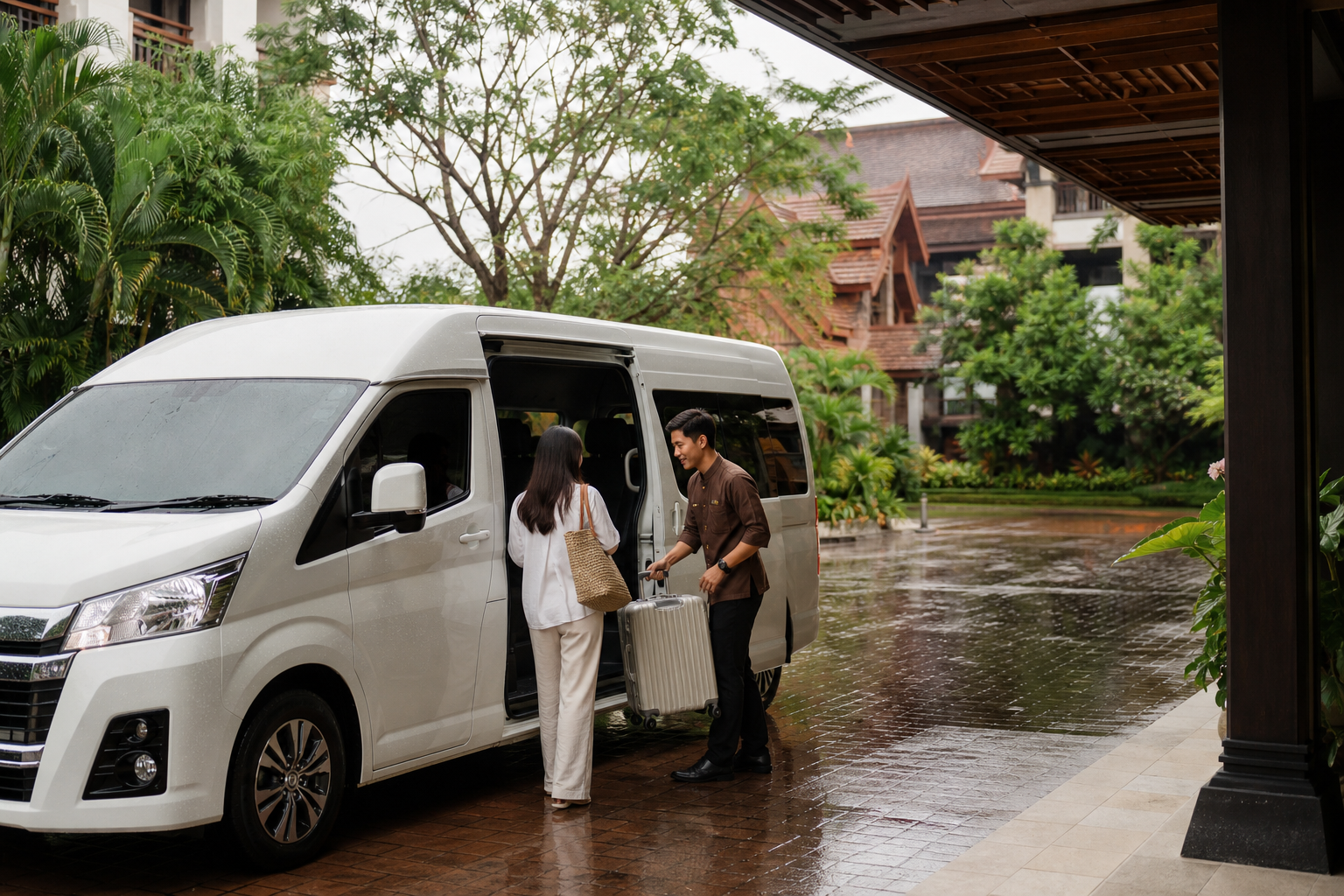
For a booking conversation, the useful question is whether the group wants to protect the mountain stop or keep the day mostly urban. A mountain-first plan should leave early and accept a flexible lunch. An old-city-first plan can stay closer to shelter and use the van for short transfers. Both can be good private routes, but they answer different comfort needs.
Who this plan suits best
This route suits couples, families, and small groups who want Chiang Mai culture without worrying about transport between hills and the old city. It is also useful for travelers who have only one full day and want a clear answer instead of a long attraction list. The private van supports people who prefer shorter walking time, need air-conditioning between stops, or want to keep cameras, shopping, and rain gear in one place.
It is less suitable for travelers who want a heavy trekking day or a fixed photography schedule that depends on clear mountain views. Those trips need different planning and more condition checks. For most Mister Tour Thai readers, the best promise is a comfortable route: smart order, flexible stops, local pacing, and one vehicle that keeps the group together.
How this links to other private route decisions
Chiang Mai rainy-season planning connects naturally with broader Thailand route advice. Like Kanchanaburi, it needs weather margin and realistic stop count. Like Ayutthaya, it benefits from cultural focus and temple pacing. Like Phuket, it rewards fewer stops chosen in the right order. These internal comparisons help readers understand that private van value changes by destination, but the planning logic is consistent.
If travelers are comparing northern Thailand with Bangkok or island routes, the main difference is terrain. Chiang Mai adds hills, cooler air, temple stairs, and more variation between city and mountain. That is exactly why a private van can feel practical even for a short day. It turns a mixed route into one connected experience.
Booking notes for a smoother Chiang Mai day
Before booking, share the hotel name, passenger count, walking comfort, preferred pace, and whether the mountain temple is the must-see stop. Mention children, older guests, large bags, or anyone who prefers fewer stairs. Ask for a route with one protected highlight and one flexible backup rather than a schedule packed with every possible stop.
The best Chiang Mai rainy-season private van plan is calm, specific, and adjustable. It should make the mountain feel reachable, the old city feel easy, and the return to the hotel feel comfortable. When the route respects weather, energy, and real transfer time, a rainy-season day in Chiang Mai can still feel polished and memorable.